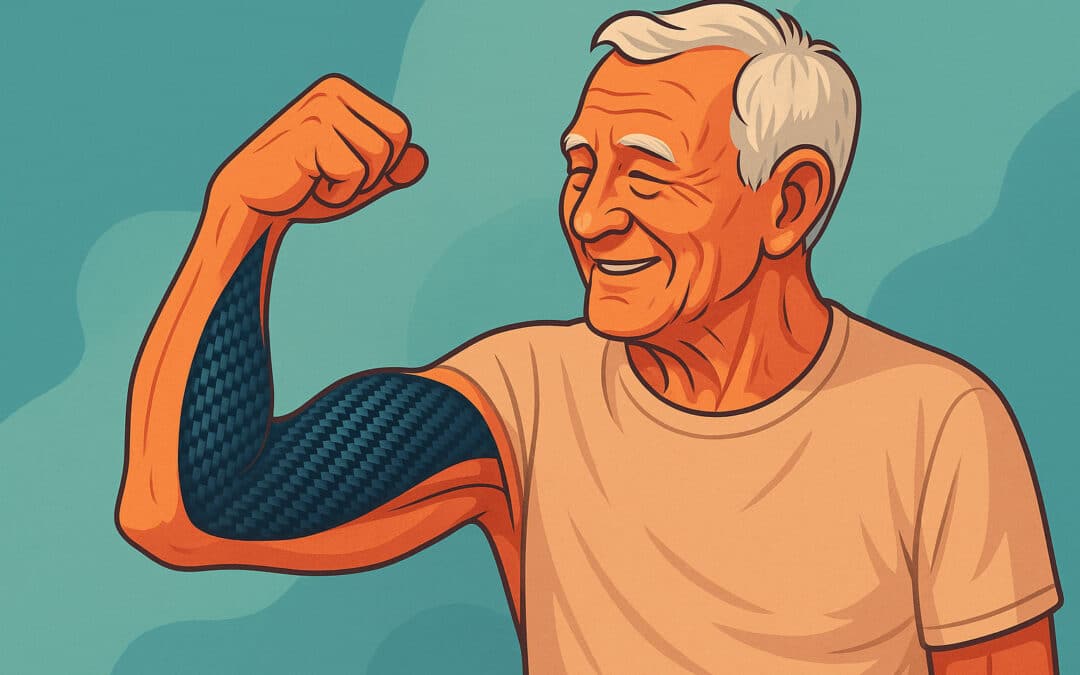
Anyone who has ever been on a carbon ski or snowboard knows that the material not only feels fast - it is also impressively light, stiff and direct. But what many people don't know: Carbon hardly ages at all. No corrosion, no classic material fatigue. But how can that be?
A high-tech material with inner values
Carbon - or more precisely: carbon fiber reinforced plastic (CFRP) - consists of ultra-fine carbon fibers embedded in a plastic matrix. The fibers themselves are highly tensile - stronger than steel, but at a fraction of the weight. This structure is what makes the material so exceptional.
The carbon atoms in the fibers are linked in extremely stable chains. This makes carbon not only chemically inert, but also extremely resistant to UV radiation, moisture and temperature changes. It does not rust, there are no plasticizers that volatilize and it retains its shape for many years.
Fatigue? Yes - but only under extreme conditions
Carbon is known for its exceptional strength and rigidity with minimal weight. It can withstand enormous loads - over many years. Whether repeated bending stress, strong vibrations, permanent compressive and tensile forces or temperature fluctuations: As long as the load remains within the design limits, carbon shows no classic signs of fatigue, as is known from metals, for example.
Only under extreme conditions can a gradual change in the microstructure occur over very long periods of time - for example when high cyclic loads act millions of times, in combination with punctual overstressing, strong UV radiation, moisture, heat or chemical influences. Such scenarios generally only occur in industrial applications, high-performance sports equipment or incorrectly designed components.
In everyday life - even under sporting or intensive use - carbon remains dimensionally stable and resilient. The material does not simply fatigue over time.
However, carbon is less forgiving when it comes to punctual, lateral impacts. A seemingly harmless scratch or knock may have already led to a crack on the inside. But even then, disaster is not inevitable: With modern diagnostic technology, such damage can be reliably detected and permanently repaired - with complete restoration of structural integrity.
Repairing instead of throwing away
A Carbon breakage is no longer a total loss. With the right technology, damaged carbon bicycles, water sports equipment and other items can be repaired professionally and stably. This saves resources, makes economic sense - and extends the service life of the product by many years.
We have been using carbon in the development of our skis and snowboards for many years - and for good reason.
Carbon is not a fashion trend, but a high-tech material with unique properties. It is extremely light, stiff and durable like no other material. Carbon really comes into its own in winter sports, where every gram counts and every movement needs to be precise.
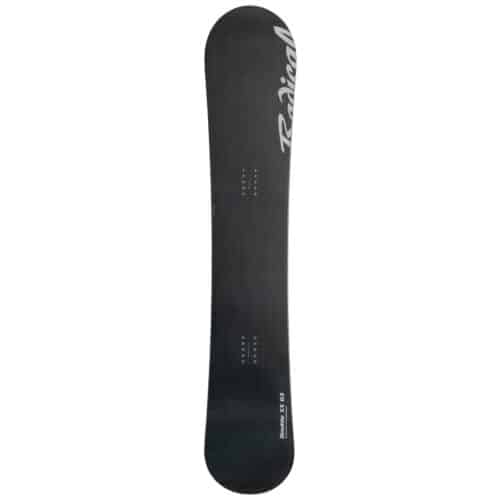
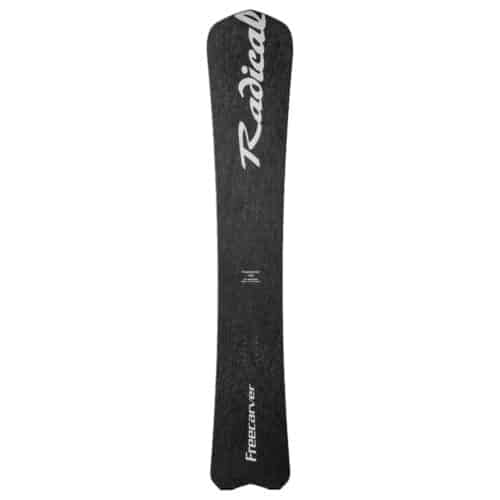
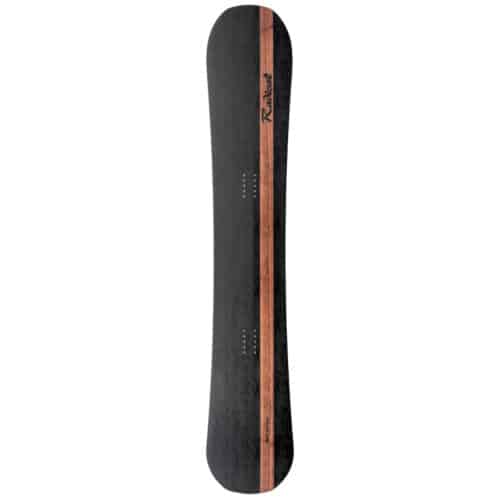
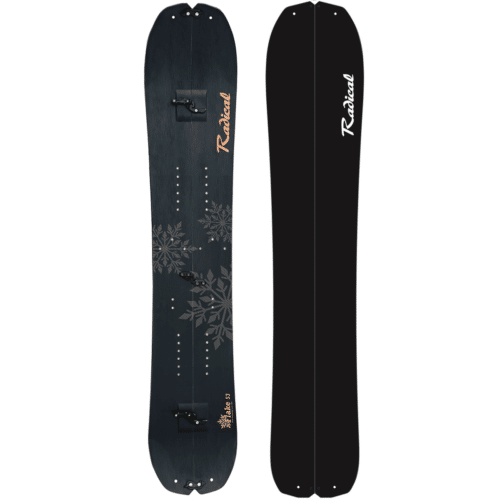
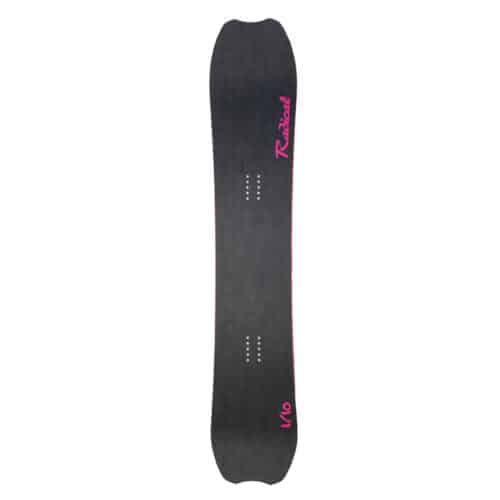
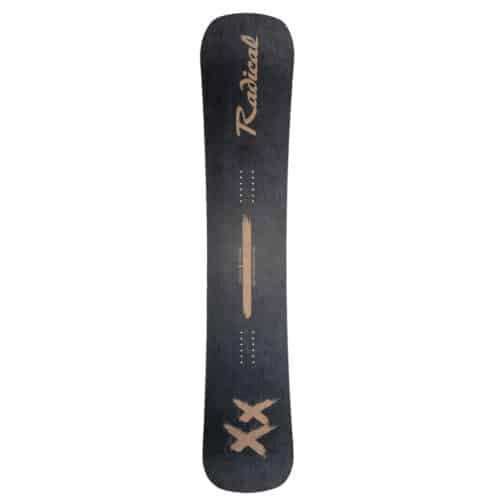
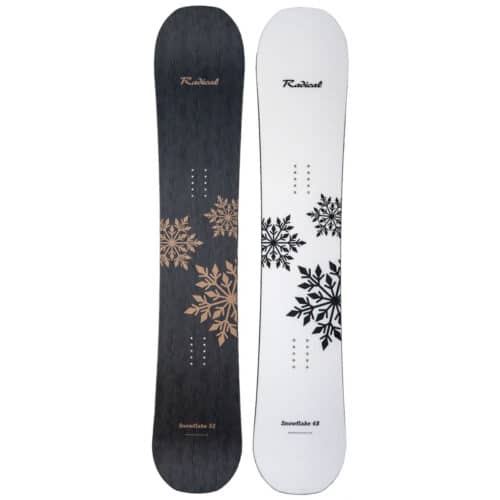
We use carbon layers in our boards and skis where they bring the most benefit: for more pop, more edge grip and a more direct feel. We do not rely on individual carbon strips or selective inserts, but on full-surface layers across the entire length and width of the product. This allows the fiber to act continuously - from tip to tail. This not only ensures maximum stability, but above all a harmonious distribution of power and a clean, precise ride.
Another advantage: the return force - i.e. how quickly a ski or board returns to its original shape after a load - is particularly high with continuous carbon. This not only makes the turn more powerful, but also more controlled. The board remains reliable and responsive, especially in changing snow conditions or challenging terrain.
Anyone who has ever been out on an ultra-light Radical ski or board knows how lively it feels. The reaction to steering impulses is more immediate, the edge grip more precise, the buoyancy in powder more playful. Carbon takes performance to a new level - and that is precisely why we use it uncompromisingly and with full expertise.
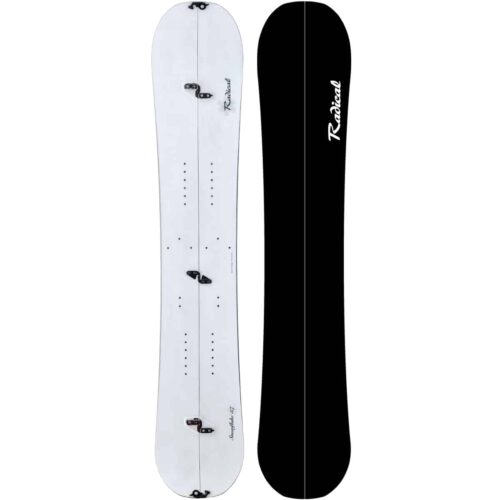
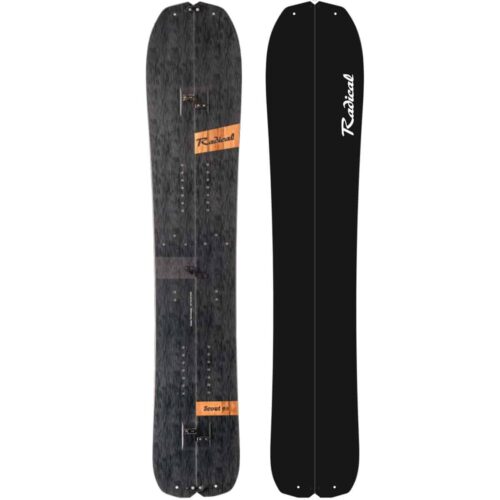
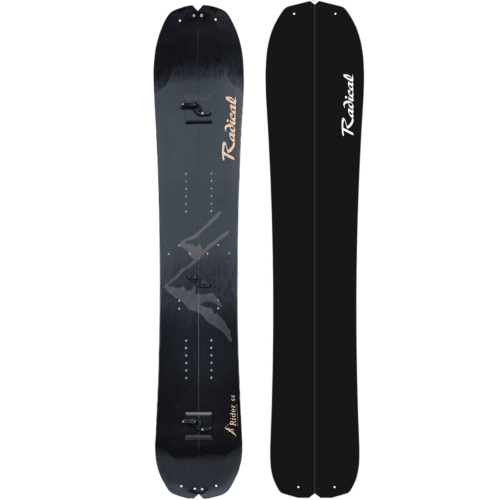
Whether you're carving with pleasure, riding steep couloirs or on a splitboard tour - the reduced weight and optimized performance make all the difference. For us, one thing is clear: carbon doesn't just belong in Formula 1 or aircraft construction, but also on the mountain.
That's why we have been using this material for decades - and are constantly developing it further in our skis and snowboards.
Our conclusion: carbon is not a short-lived hype.
Carbon is a modern composite material with enormous long-term stability - ideal for anyone who is looking for performance, lightness and durability. The material really comes into its own when it comes to skis and snowboards: Thanks to its unique structure, it can withstand thousands of times more deflection than conventional materials. This means: noticeably longer service life, consistent tension, no loss of performance - even after many seasons.
But it's not just the durability that's impressive: carbon provides a more direct feel, more pop, faster edge changes and significantly more control. It makes the difference between good and great skiing fun - whether on a freshly groomed piste or in deep powder.
We use it, we understand it - and we use it to build skis and snowboards that you'll never want to give up.
Carbon is our DNA: Discover our latest models with carbon power - developed for maximum control, minimum weight and maximum riding fun. To our collection
Or drop by our store in Zurich - and experience carbon the way it's meant to be.
We are delighted to welcome Roland Primus, a formative pioneer of the snowboard scene, for an interview.
As the founder of the world's oldest snowboard school and a pioneer of snowboard instructor training, he has had a decisive influence on the development of the sport. As a founding member of the SSBA and SSBS, he not only fought for the recognition of snowboarding as a winter sport, but also made a significant contribution to the professionalization of snowboard instruction in Switzerland. With tireless commitment and visionary ideas, he set new standards and created a foundation that still influences snow sports today.
In an exclusive interview, Roland gives us exciting insights into the beginnings of snowboarding, his personal highlights and the development of the scene over the last few decades.
Look forward to inspiring stories and anecdotes from the time when snowboarding was still a crazy adventure.
Picture: Roland Primus
... Every snowboarding career starts with a frontside and a backside turn and ends with it. Everything in between is nice, but not essential ...
Please introduce yourself briefly.
My name is Roland Primus and I am the founder of the oldest snowboard school in the world.
As a founding member of the SSBA (Swiss Snowboard Association) and the SSBS (Schweizer Schneesport Berufs- und Schulverband), I not only helped to set up these associations, but have also dedicated my life to teaching snowboarding.
Through my active career as a World Cup rider for Burton, I was able to gain valuable experience. In addition to my coaching training, I founded all the national snowboard teams in Switzerland. But it wasn't always easy to get there.
Captions:
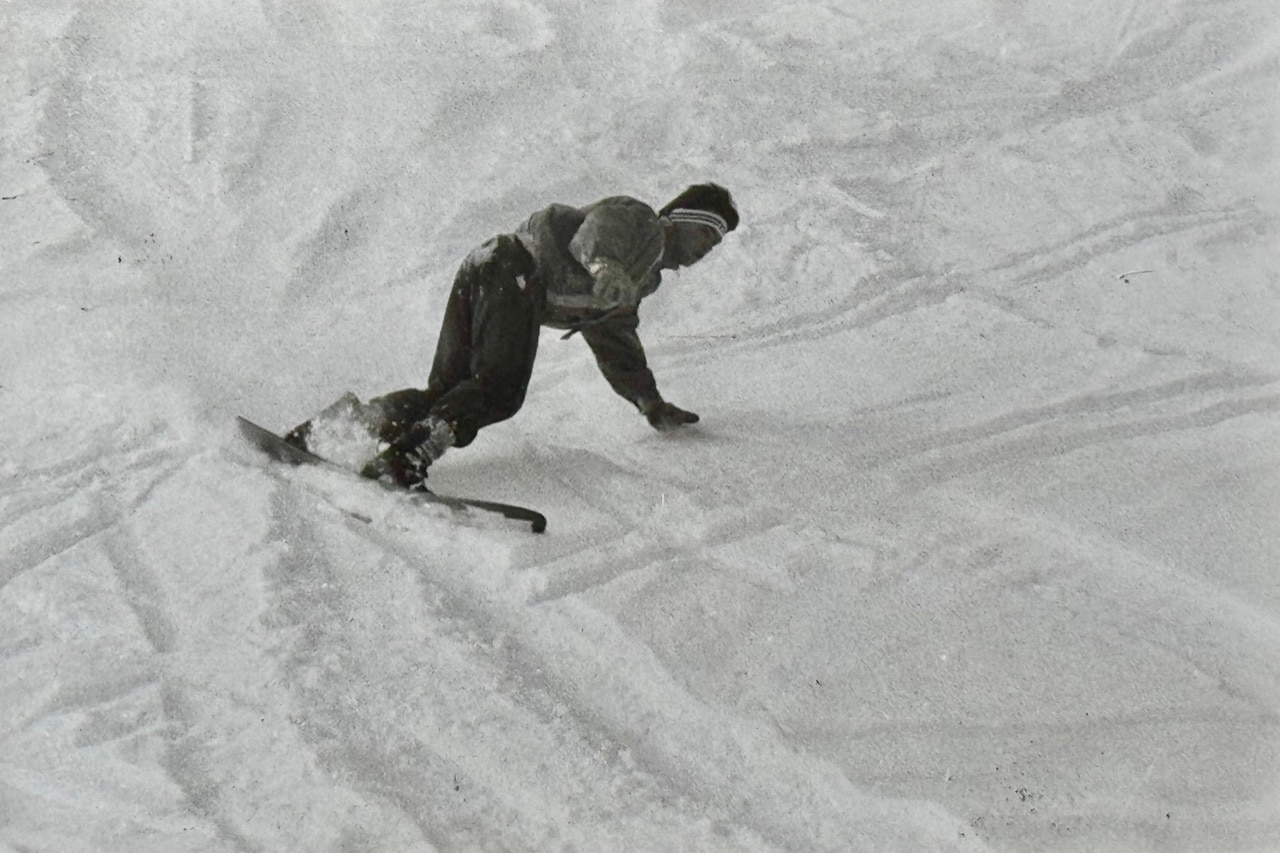
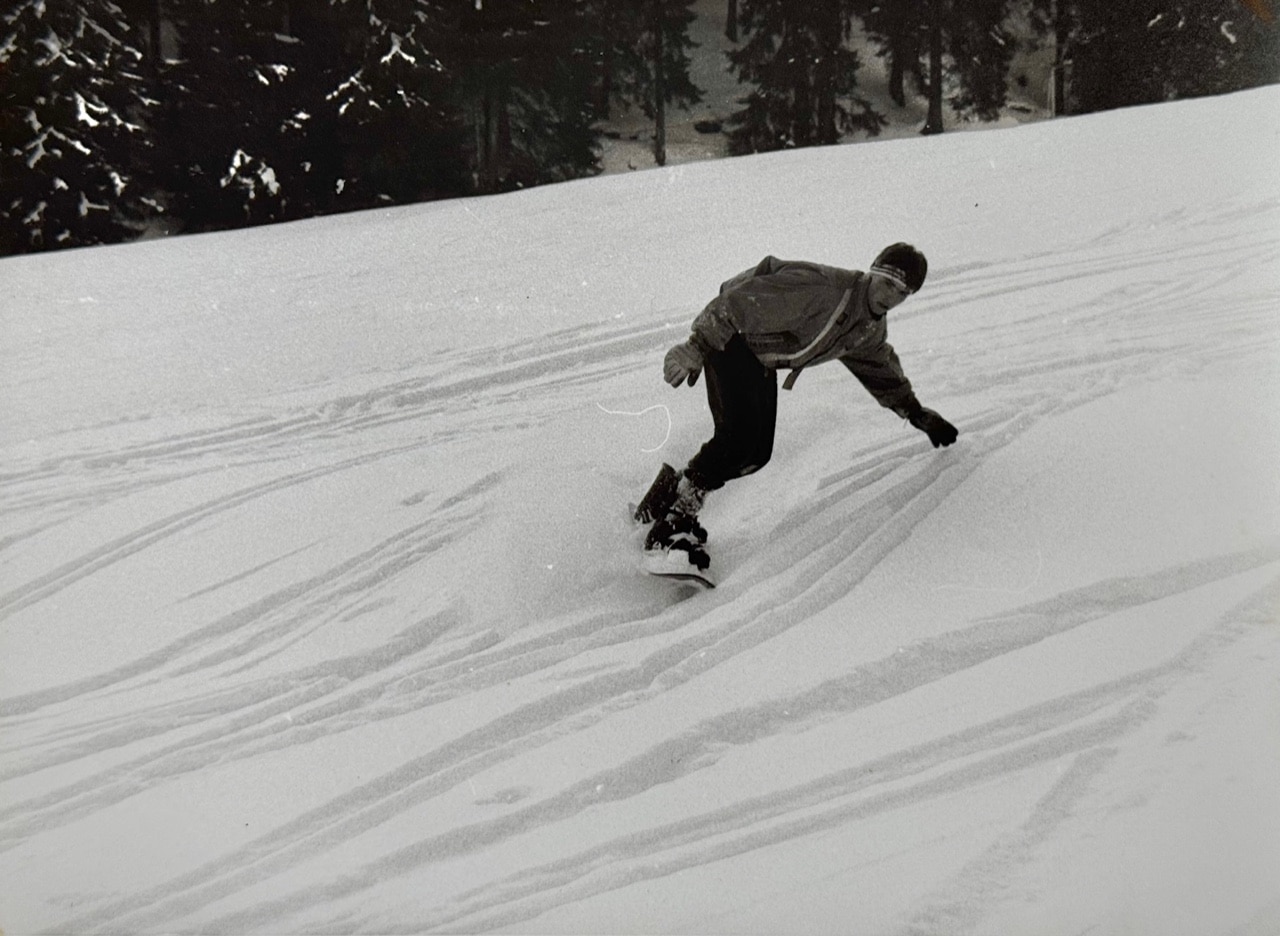
Advance glacier near Flims-Laax, late 1980s
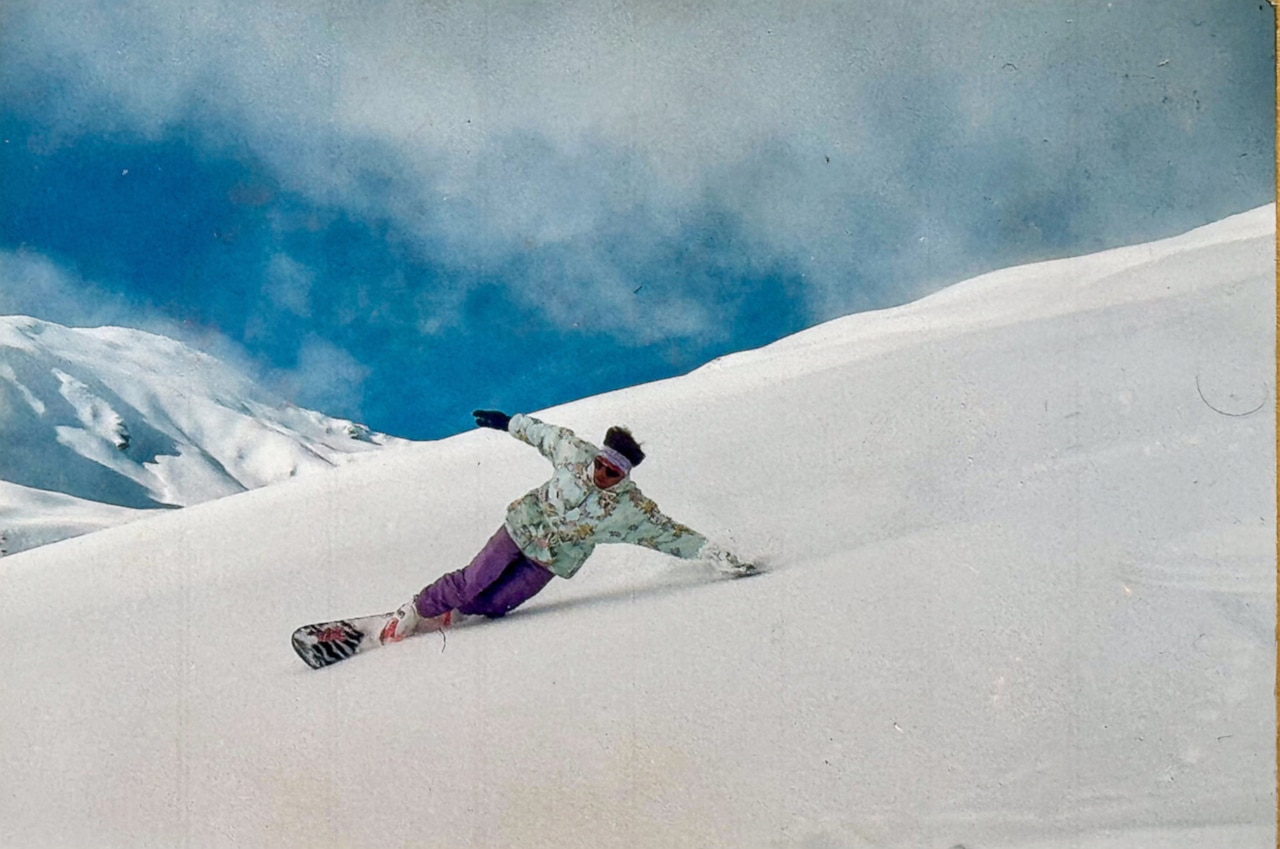
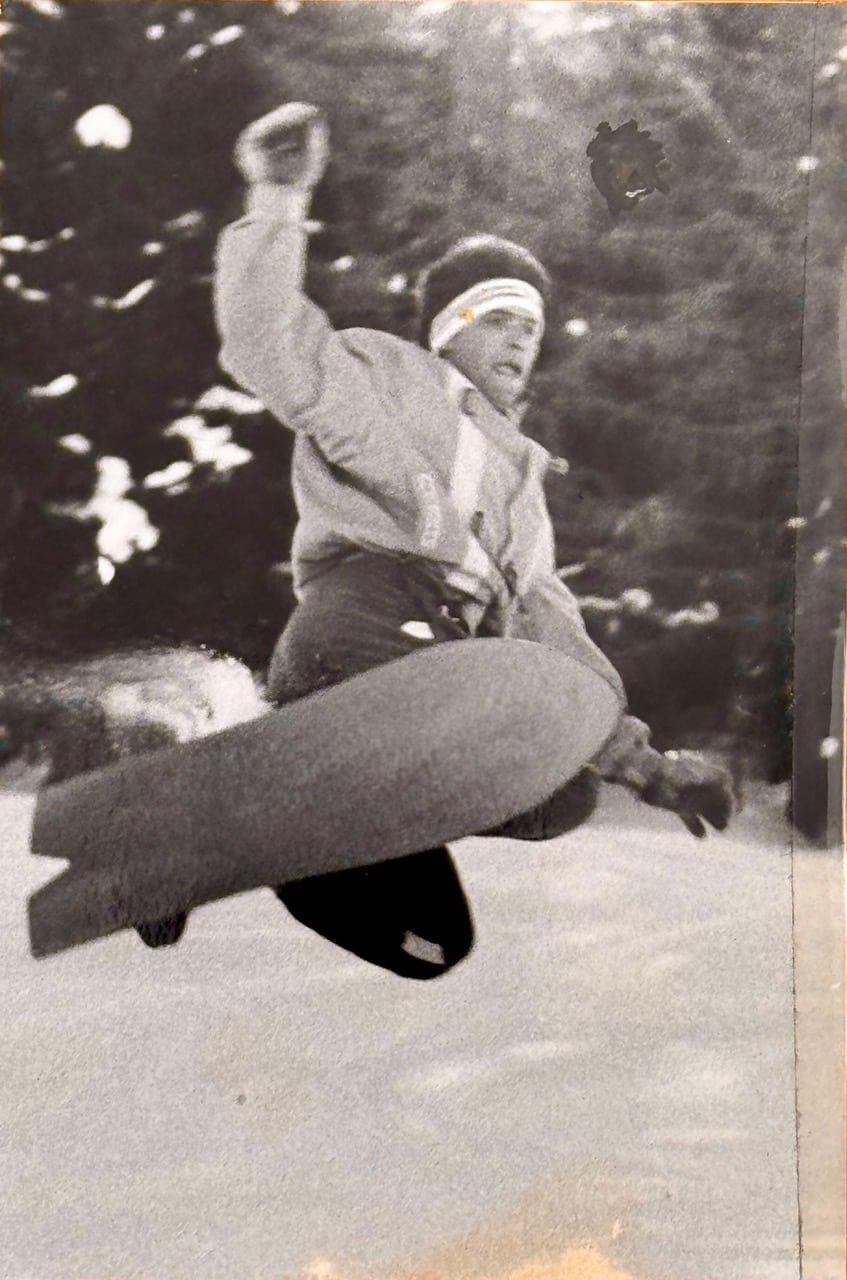
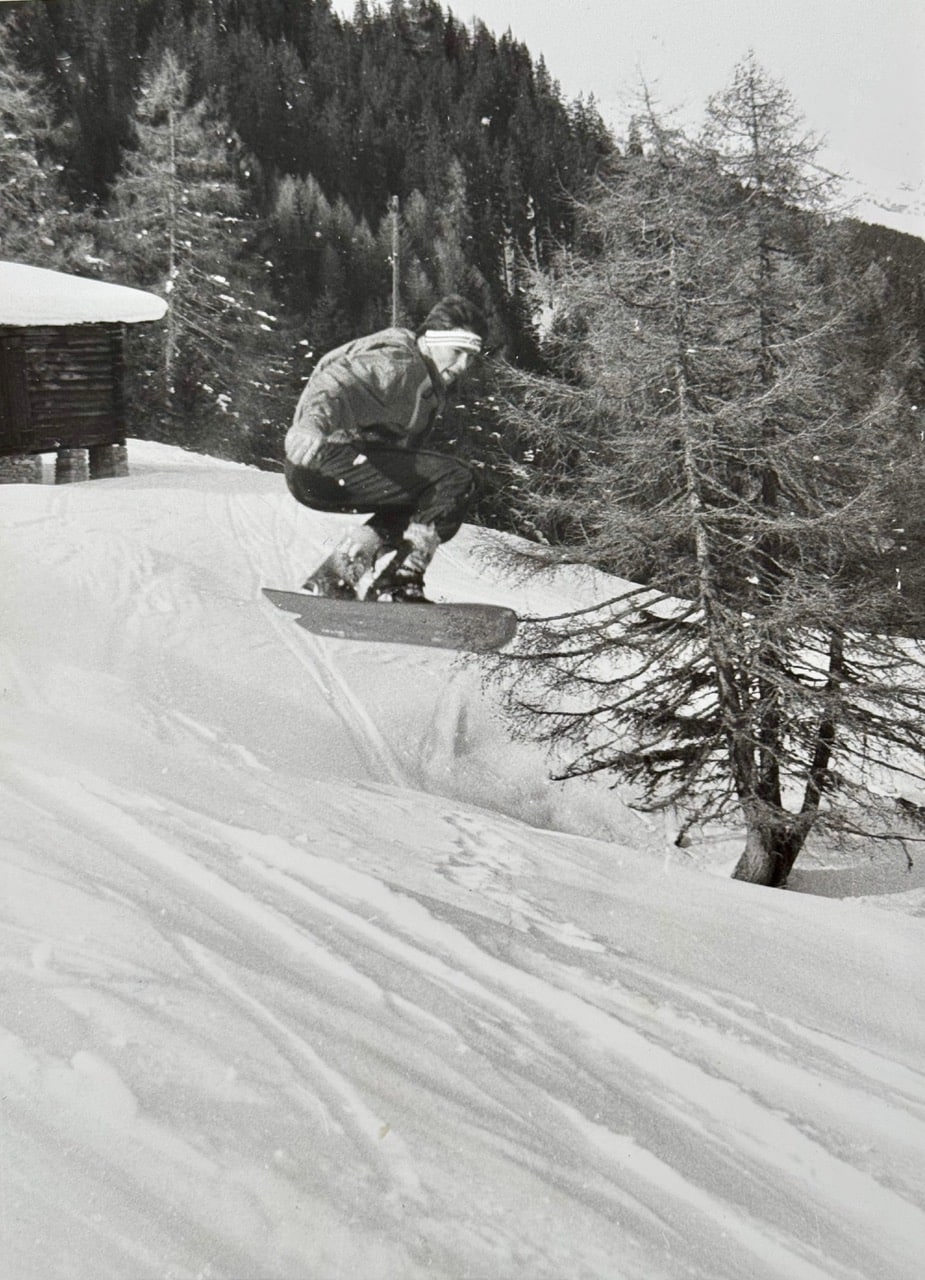
Hardboot-Powderturn, unknown location, mid-1980s
What was it like to open the world's first snowboard school?
When I wanted to open a snowboard school in 1986, I found out that this was only possible with the consent of the local ski school. I felt this regulation was unfair. So I decided to take action against it - with far-reaching consequences. I took the responsible department and the canton of Graubünden to the Federal Court and won. This led to a revision of the law, a referendum and finally the adoption of the free market economy in the snow sports service sector. This meant that it was officially permitted to run snowboard schools independently of ski schools.
From the point of view of the Swiss ski schools, this success probably made me the least popular snowboarder in Switzerland. But for me it was an important step for the future of snowboarding.
This was followed by 30 years of fighting for the rights and opportunities of snowboarding in order to establish this sport as an integral part of winter sports. My goal was to offer everyone the best possible conditions to learn snowboarding - whether as a hobby, as an amateur or as a professional athlete.
At the same time, I developed a method for the structural graphical representation of movements in a movement grid. I also wrote seven books on didactics and technique in snowboarding and skiing.
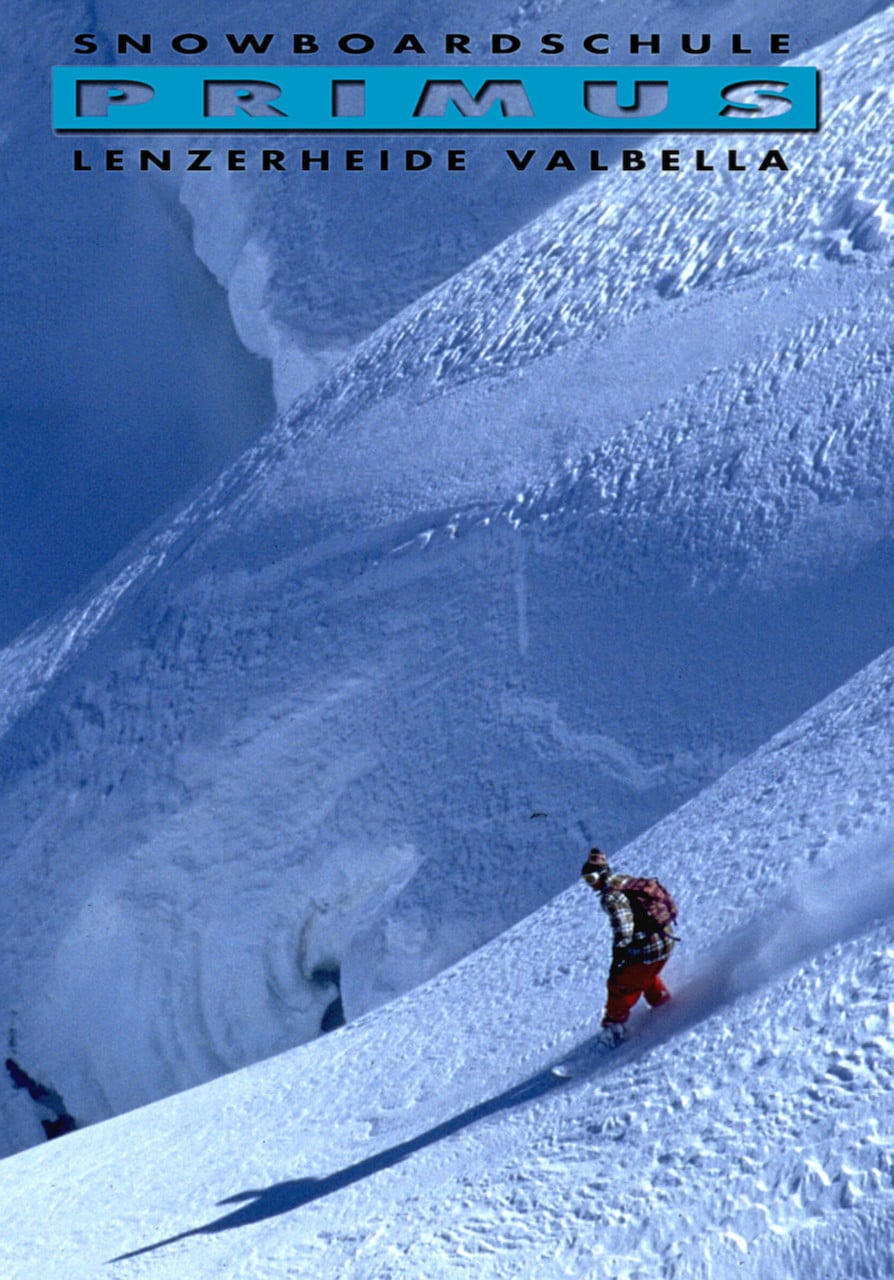
Caption: Poster in front of the Primus Snowboard School in Lenzerheide - the world's first snowboard school. Taken on the Allalingletscher in the late 1980s.
What excited you most about snowboarding back then?
I was most inspired by the movement and dynamics of snowboarding. To this day, I consider it one of the most beautiful sports, as few sports combine dynamics and elegant movements like snowboarding. Keeping your feet fixed and the associated control over the sports equipment was a huge advantage over skiing. For us young people who lived in the mountains, "surfing" on snow brought a bit of a surfer lifestyle to our surroundings.
Back then, it was extremely exciting to experience this new sport as a lifestyle in a rebellious group. The opposition from the ski lobby only brought us closer together, and the dynamic was not only overwhelming on the board, but also socially. You were part of something new, something different. The establishment was challenged and we were able to reinvent many things and define movements. Even the skiing world later adopted elements such as parallel slalom, boardercross, halfpipe and big mountain powder. It was incredible to be part of this development and to help shape it - it was a unique experience.
What prompted you to found the SSBS?
The main reason was - as is so often the case - dissatisfaction with something that already existed. The SSBA, the umbrella organization at the time, also took care of the competitions, which diverted financial resources away from training. That was unsatisfactory. That's why I founded the SSBS to be able to drive training forward independently. The national teams and coach training soon followed. While the SSBA took care of competitions and grassroots sport, the SSBS was dedicated to education and training.
Once we had created the structures, we handed them back to the SSBA. Unfortunately, the association got into financial difficulties and was later taken over by Swiss Ski. My goal was to see Swiss snowboarding on the international podium - also as an advertisement for the schools.
In my opinion, this was the best thing for the schools. If we as Swiss are top in international comparison, more people want to take part in sport, so it's better for the schools. For me, the race and the teams were a marketing tool for the schools. Without a lot of money, you could use the expertise of the schools and the training to get great publicity if you won titles. And that's what we did. Switzerland dominated snowboarding like no other nation during this time.
Captions:
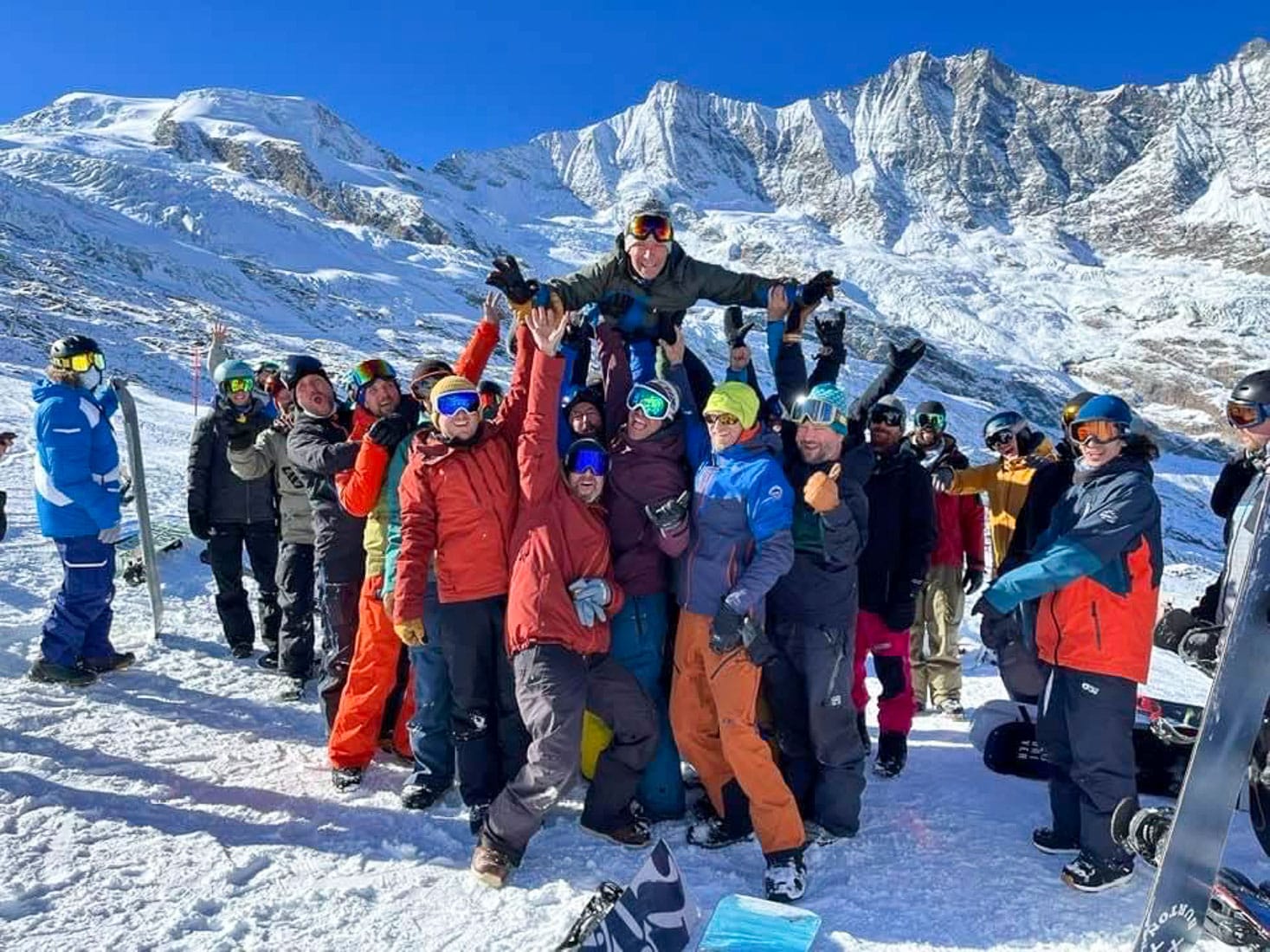
1. farewell to Roland as Technical Director of the SSBS in Saas-Fee, November 2023.
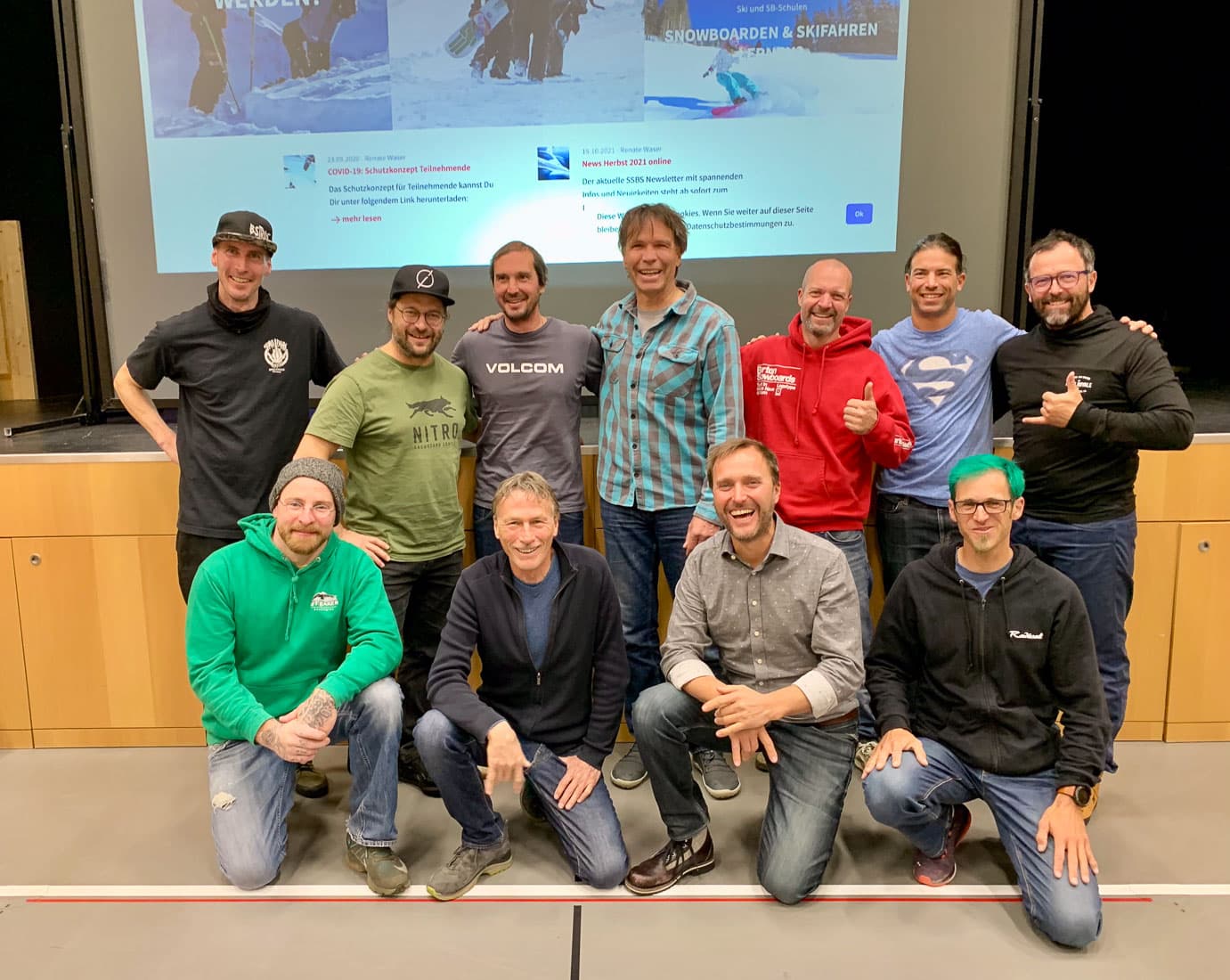
2 The SSBS Board would like to thank Roland for his many years of service. At the turn of the year 2024, he handed over his position as Technical Director to Lukas Sieber (to the left of Roland). The new SSBS President is Daniel Schmid (back right in the picture).
What future do you see for the profession of snowboard instructor, and what role will it play in the further development of the sport?
As in many areas, the right time to get involved is crucial. What was possible back then is often no longer possible today - and vice versa. That's why, from my experience, you can't deduce one-to-one what you should or shouldn't do today, as the framework conditions have changed.
In the past, it was almost impossible to make a living solely by teaching snowboarding. Today, however, there are numerous opportunities to secure a permanent position in snowboarding as a coach or in organizations such as Swiss Snowboard, Swiss Olympic or Jugend+Sport. These structures did not exist in the past - they first had to grow.
The structures for professional athletes are also better today than they were back then. But at the same time, the demands have also increased, while pay and sponsorship have not necessarily become more attractive. This is often the case when a sport is just starting out: there is a lot of potential and therefore also more financial resources.
On the other hand, the snowboard industry is an area that has seen continuous stable development. Today, there are many opportunities to work in the sport - be it in development, production, marketing or sales. Anyone who wants to live the sport and earn a living from it has many options here.
As a snowboard instructor, few have been and will be able to support a family on this alone. The seasonality makes it difficult, forcing many to find additional work or move between the northern and southern hemispheres to work all year round.
Nevertheless, training to become a snowboard instructor offers the best foundation for understanding the sport in all its depth. It is the only way to really "study" snowboarding - to learn how it works, how to apply it and how to teach it. This knowledge is essential for anyone who wants to work in the industry.
If you know how snowboarding works, you can be active in many areas:
as a trainer
as an employee of an association
in the competition area and in the organization
in industry, production or in sales and marketing
This is why you can still find many former snowboard instructors in key positions within the sport today. They have the knowledge and experience needed to develop the sport further.
Captions:
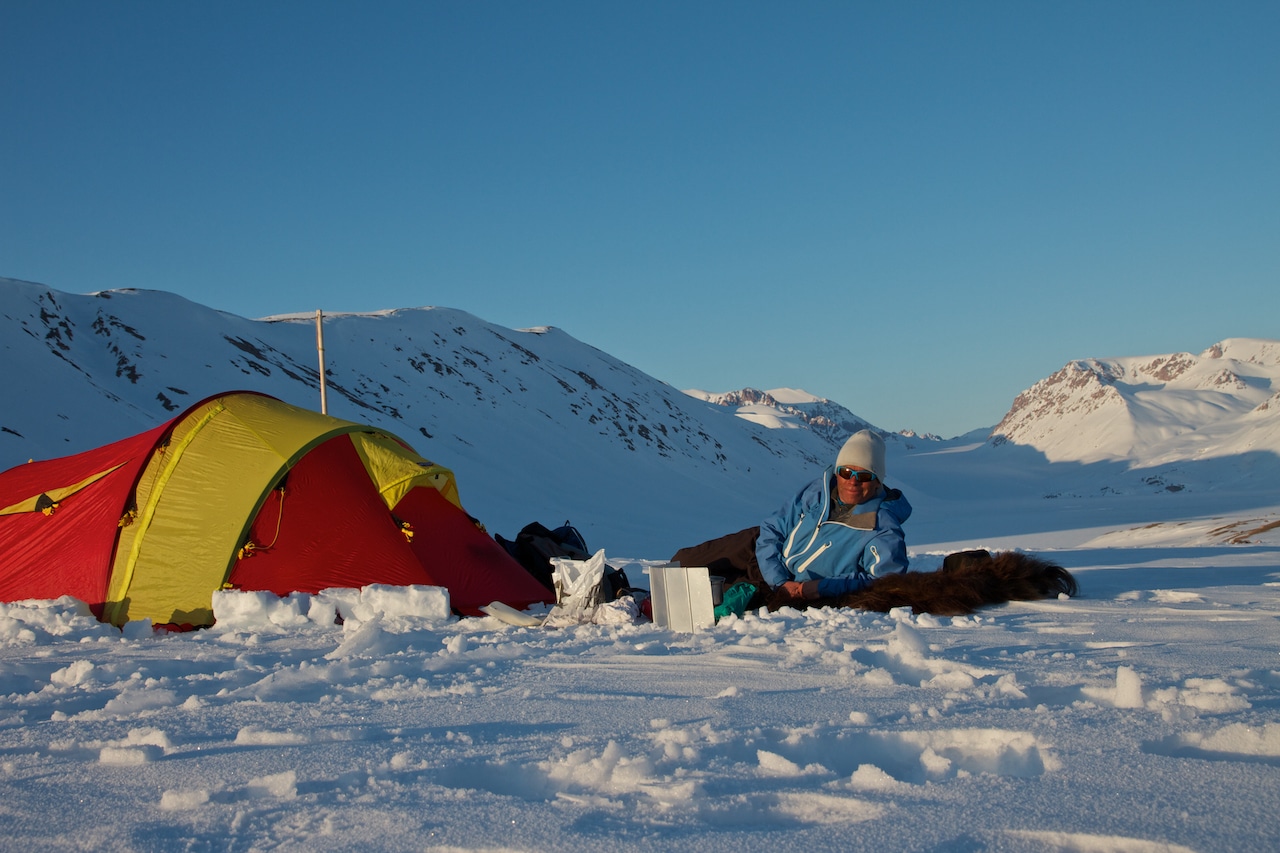
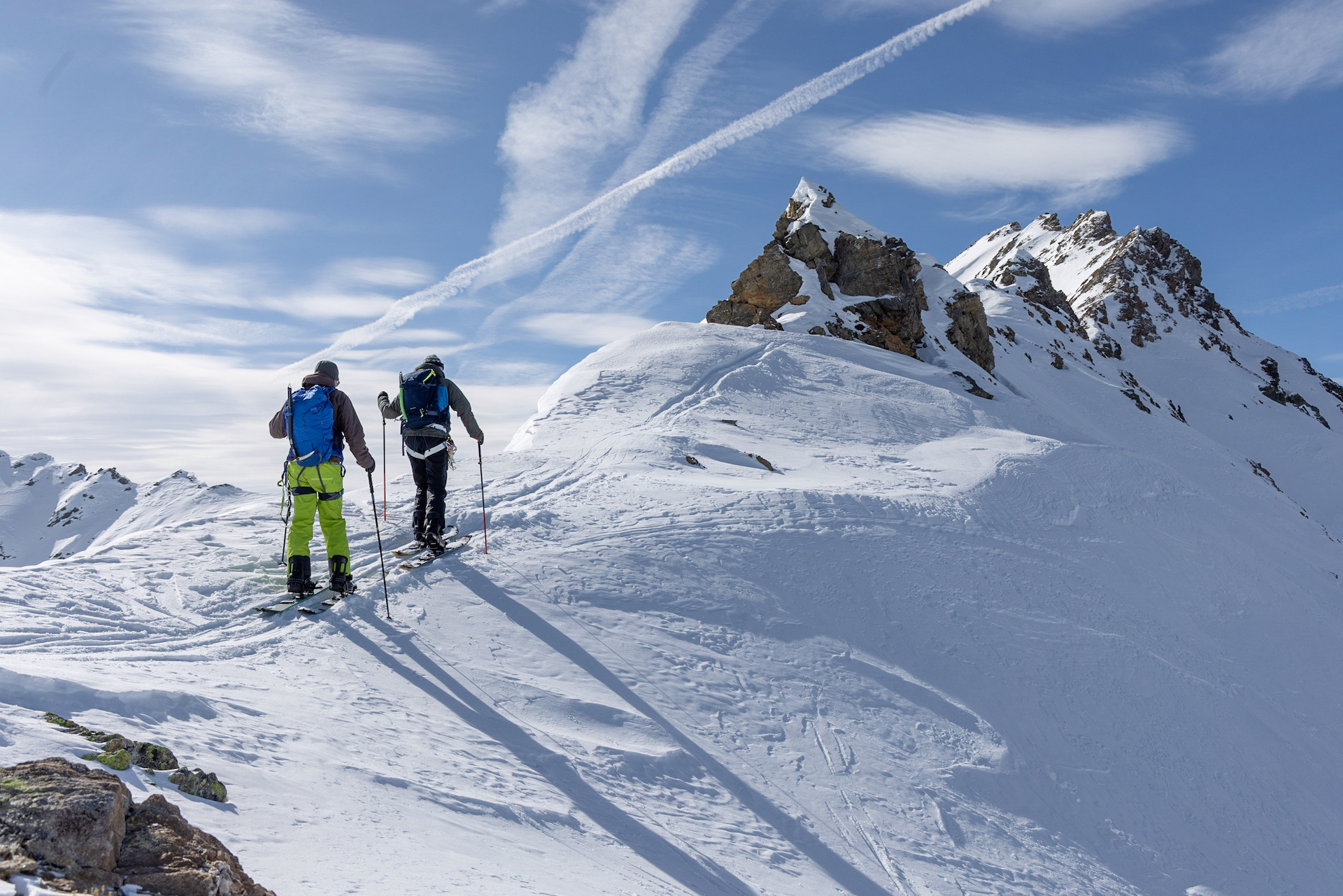
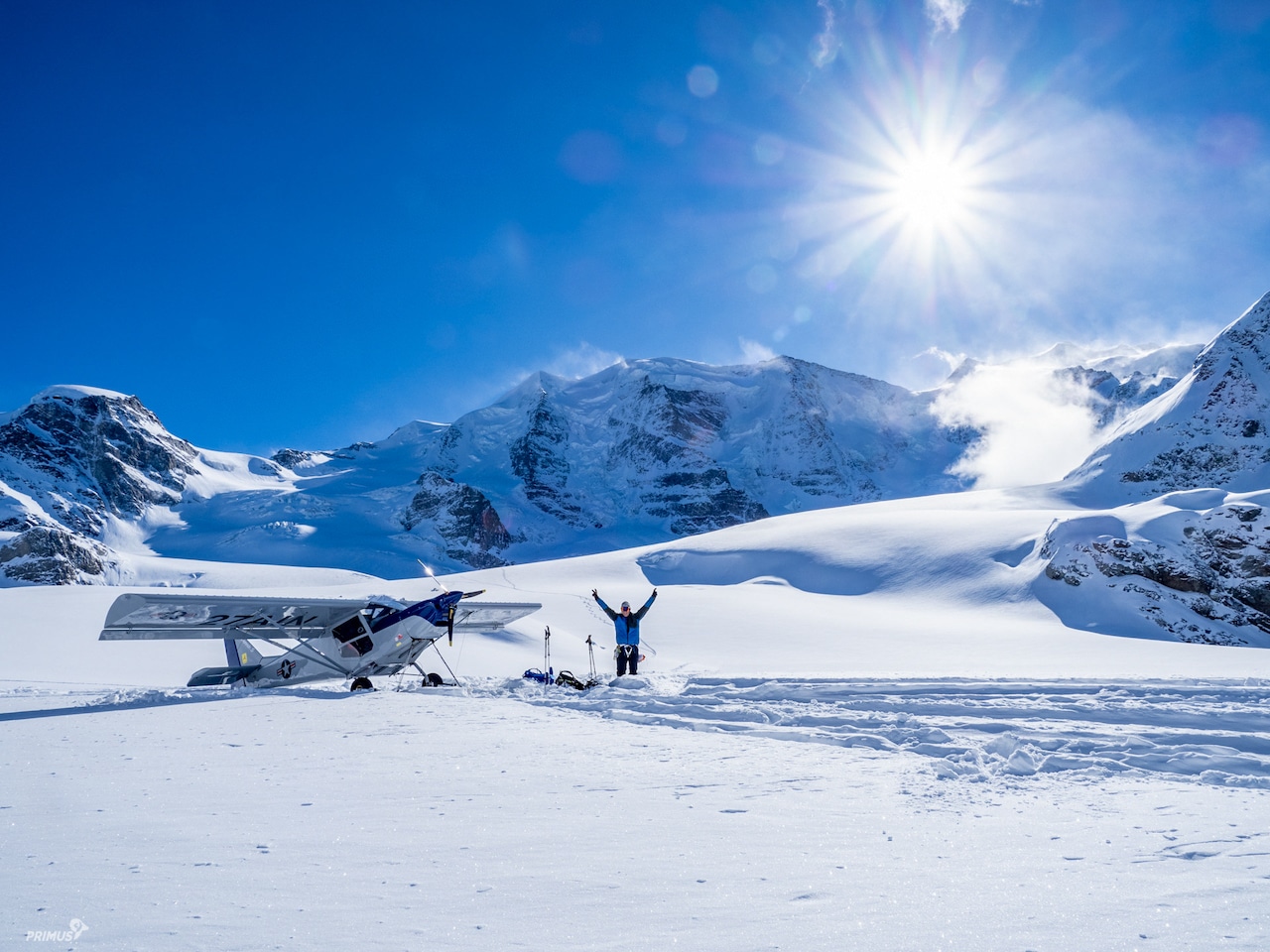
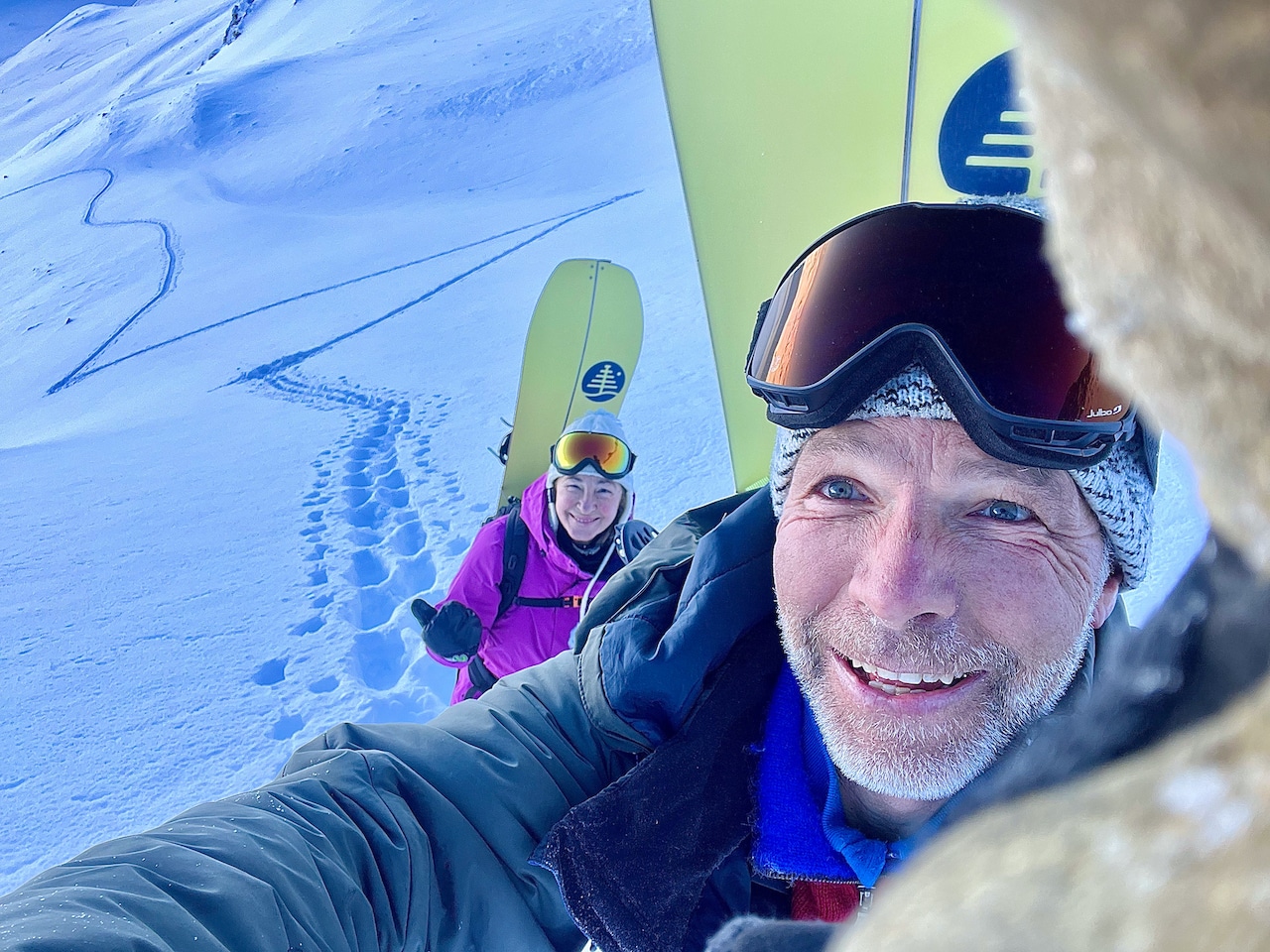
1. powder skiing in Furcellas, Engadin, late 1990s 2. Splitboard camp in Greenland, 2014 3. Splitboard tour for a photo shoot for the Curli brand. Roland's latest project: dog harnesses. Together with Mark Zimmermann, he founded Curli to transfer their knowledge from mountain sports to the everyday lives of dogs and their owners. The result: high-performance dog harnesses that combine functionality, comfort and safety. 4 Another passion: flying. Here in front of Piz Palü - Split & Fly might be a more appropriate name. 5. Roland and his wife Claudia
How did you experience the founding of Radical?
Having ridden for Burton from the start, I paid less attention to Radical - but all the more to the man behind the brand: Mark Farner. For me, Radical = Mark Farner, because he understood the sport the way I did. But at the same time, he was also my competition rival.
Mark had his own boards, which always gave him an advantage. That's why Radical was more of a problem than a solution for me back then. He was extremely fast on his board, even though he weighed significantly less than me - I must have had 25 kg more on my ribs. It was hard to beat him and for me it had to be the material.
Luckily, Mark spent a lot of time in Zurich, where he built his "wonder weapons", while I trained in Laax and Lenzerheide and ran my two snowboard schools. The core construction of his boards was so elaborate and high quality that there was hardly another board that offered so much support. Radical was and is the board for dynamic riding with maximum grip.
As is so often the case, the difference lies in the detail.
... "Looking back, I realized that there are three great loves in my life: My wife Claudia, snowboarding and flying"...
How do you think Radical has influenced the sport?
There was a time when all brands had to be measured against Radical when it came to performance. Radical was the measure of all things. With his brand, Mark Farner showed the entire industry what was possible in board construction and what riding characteristics a snowboard could have. In doing so, he gave the sport the chance to develop in the direction of more dynamics and speed.
Snowboarding has not become so fast and dynamic by itself - Radical has made a decisive contribution to this. Thanks to Radical, surfing in powder, which worked perfectly with its infinite lateral positions and flowing carving in deep snow, could also be experienced on the piste. Grip was everything, and Radical made surfing on the piste possible. No other board could offer this in this form.
In conclusion, one thing can be said with certainty: with Radical, Mark Farner has managed to bring the surf style of snowboarding to the slopes and at the same time lay the foundation for modern carving. Mark was a surfer - and one who sought and found carving on the "frozen wave".
I thank him for that - and Radical.
Are there any special moments or anecdotes with Mark Farner that you would like to share with us?
One of the most impressive moments was when Mark presented his thesis. As a sports student at the time, he was writing his master's thesis on the biomechanical aspects of release forms in snowboarding. For me, this event is a milestone in the history of the sport.
With his background in skating and snowboarding, he showed a completely new way - an understanding of movement sequences that was groundbreaking not only for snowboarding, but for many other sports. I think this is one of his greatest achievements - and also one of the most misunderstood.
His findings were so phenomenal that hardly anyone understood them. It took the established ski sport decades to even understand them.
For me as a competitor, Radical was often a problem, as already mentioned - but Mark Farner was the solution. But his true genius remained hidden from most people.
Would you like to send us a message to celebrate Radical's 40th anniversary?
Keep surfing. Every snowboarding career starts with a frontside and a backside turn and ends with it. Everything in between is nice, but not essential to becoming a snowboarder. Keep on carving your turns in the frozen wave.
To conclude: At the end of the interview, after we had viewed and compiled the pictures, Roland shared a nice closing sentence with us:
... "Looking back, I realized that there are three great loves in my life: My wife Claudia, snowboarding and flying"...
Thank you very much for the interview Roland!
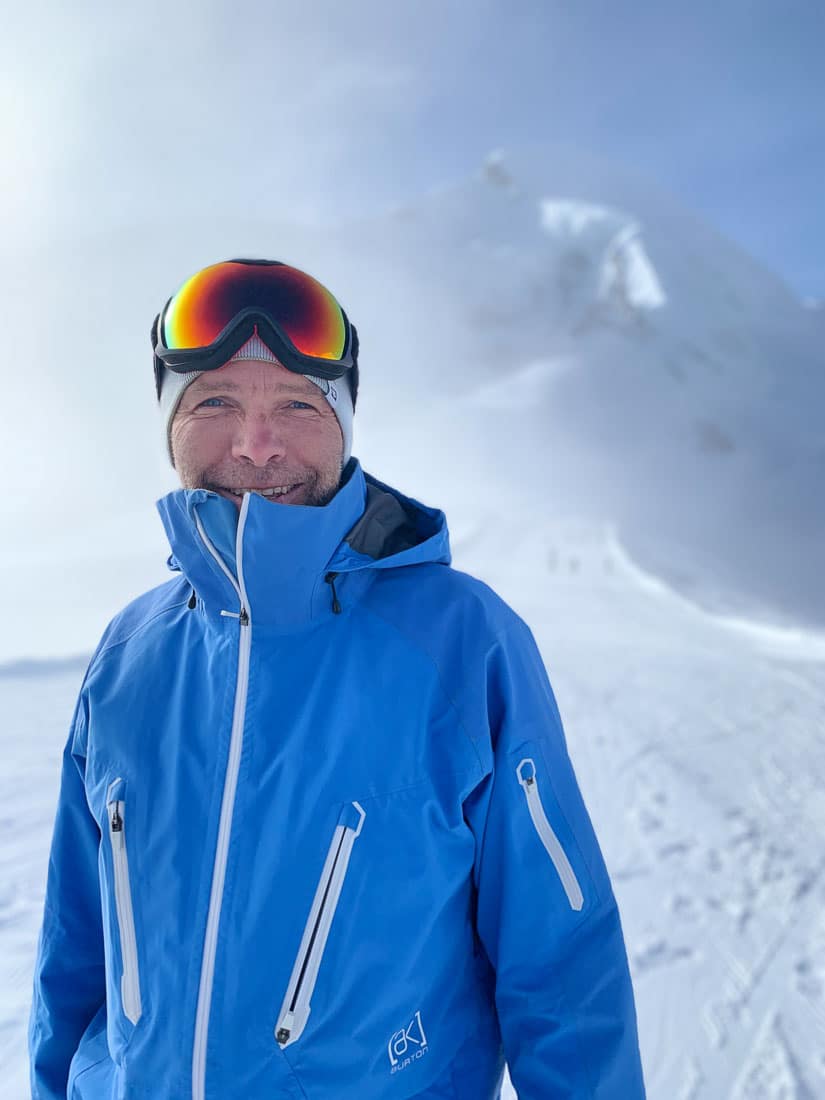
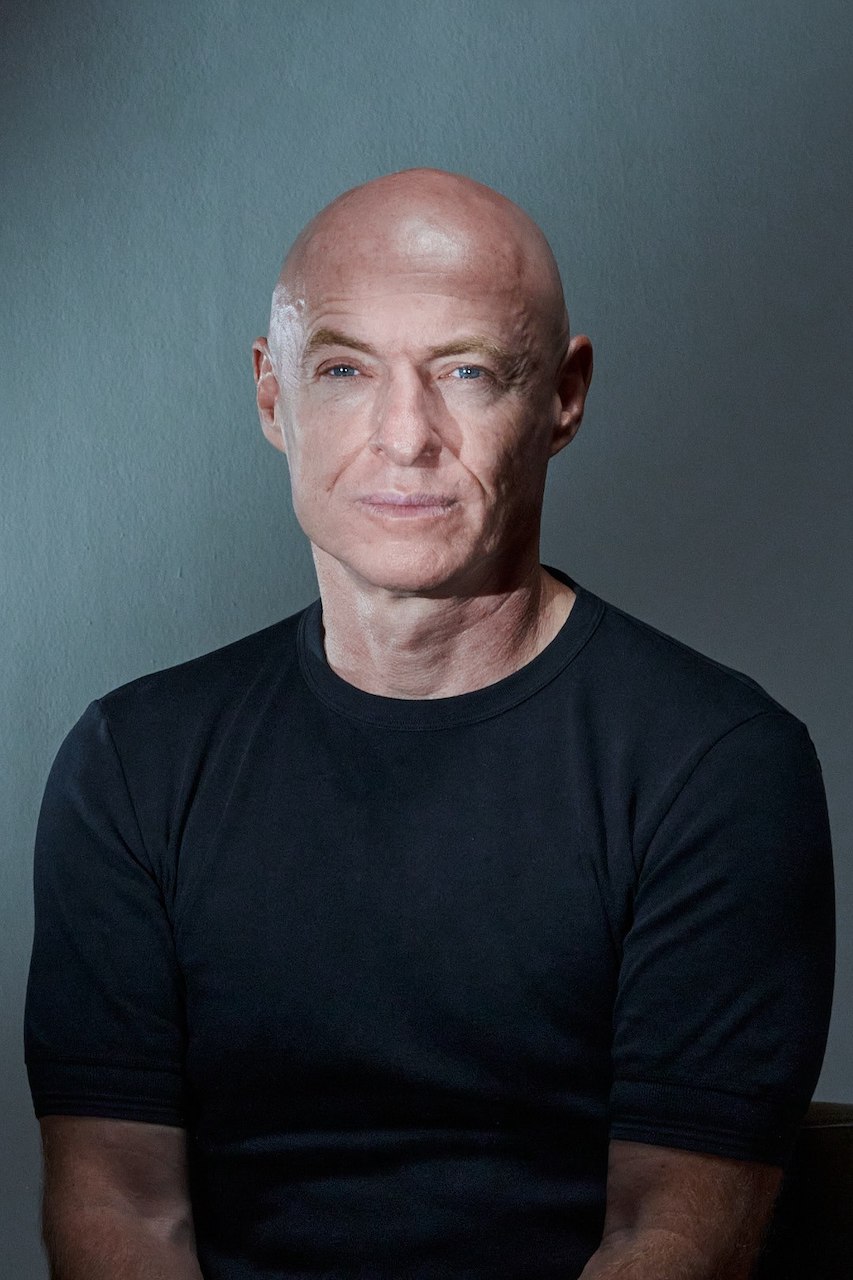
Picture: Roland Primus - still a very successful businessman today.
Radical Legends: Our story, told by those who shaped it
To mark our 40th anniversary, we took a trip down memory lane and visited a few selected Radical legends from our eventful history.
It is with great pleasure that we invite you to immerse yourself in history with us and relive the special moments. We will be publishing more exciting conversations until the end of winter - so stay tuned and be inspired!
Have you been with us from the start or do you have a question? Share your thoughts with us - we look forward to your comment!
We are delighted to welcome André "Andy" Tanner, one of the formative pioneers of the European snowboard scene, for an interview.
Andy Tanner, former Sims Pro rider, is the founder of Beach Mountain and the lifestyle brand +Alprausch. As a passionate snowboarder, he has shaped the scene both on and off the slopes by introducing innovative ideas into snowboard culture and the fashion world.
In an exclusive interview, Andy gives us exciting insights into the beginnings of snowboarding, his personal highlights and the development of the scene over the last few decades.
Look forward to inspiring stories and anecdotes from the time when snowboarding was still a crazy adventure.
Picture: Andy Tanner, Sims Pro rider and founder of Beach Mountain and +Alprausch
... Today I feel extremely grateful that I was born in an era when all these cool sports were created and developed. ...
Please introduce yourself briefly.
My name is Andy Tanner, I'm from Zurich, I was born in 1960, so I'm older, I'm a skateboarder and snowboarder and I'm still on the board... It all started with skateboarding.
I had my first skateboard in 1973, a "plastic thing". Then I was lucky enough to be able to travel to California in 1975, where I naturally caught the skateboarding bug. From the mid-70s, the worldwide skate boom developed, including in Switzerland. The first clubs were founded and championships were held.
Competition was never really my thing - rather freespirit skateboarding in various facets. Today I feel extremely grateful that I was born in an era in which all these cool sports were created and developed. We were young, had an endless belief in the future, wanted to have fun, move around and really "lived" skateboarding and subsequently snowboarding. The fascination for it still exists.
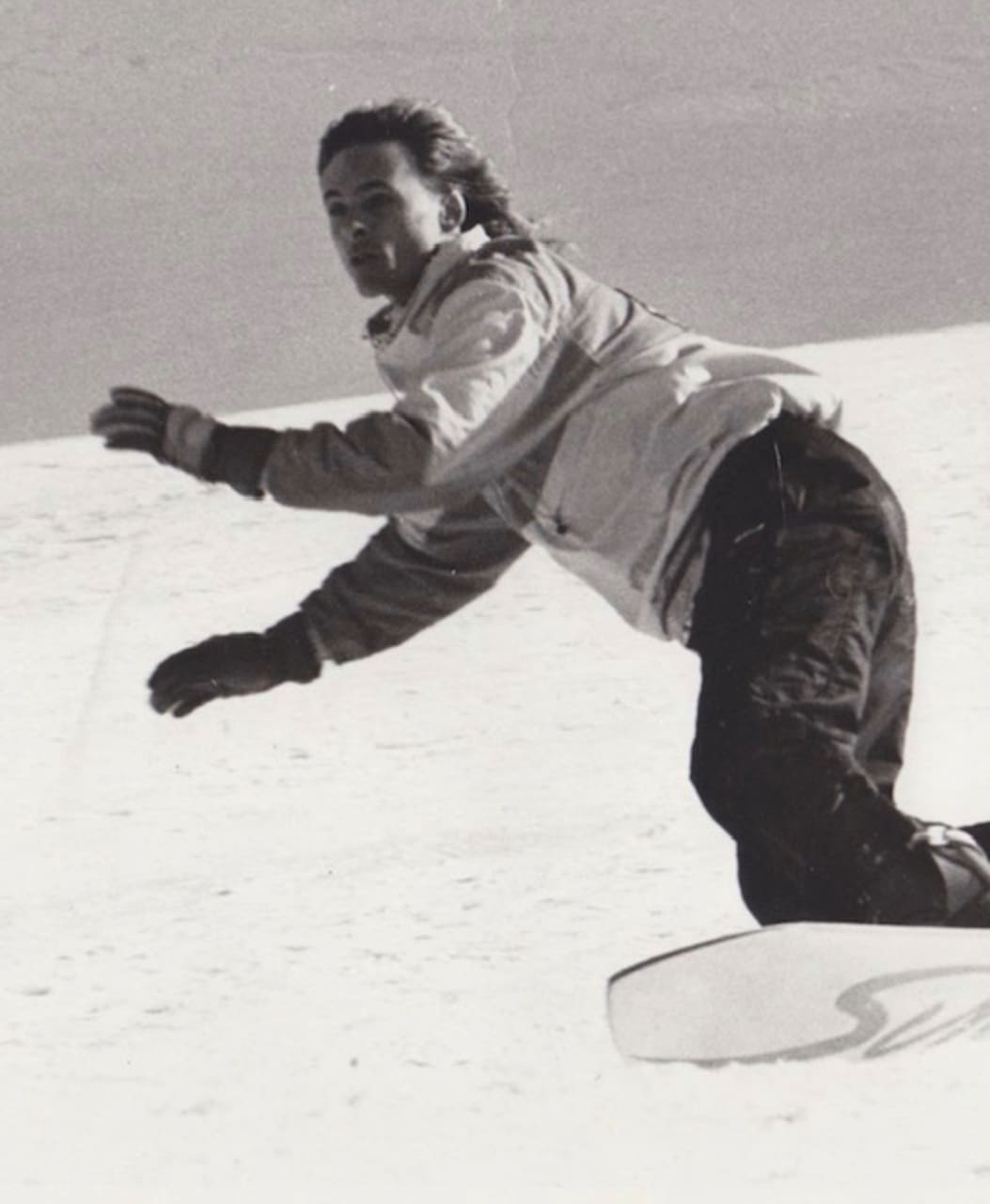
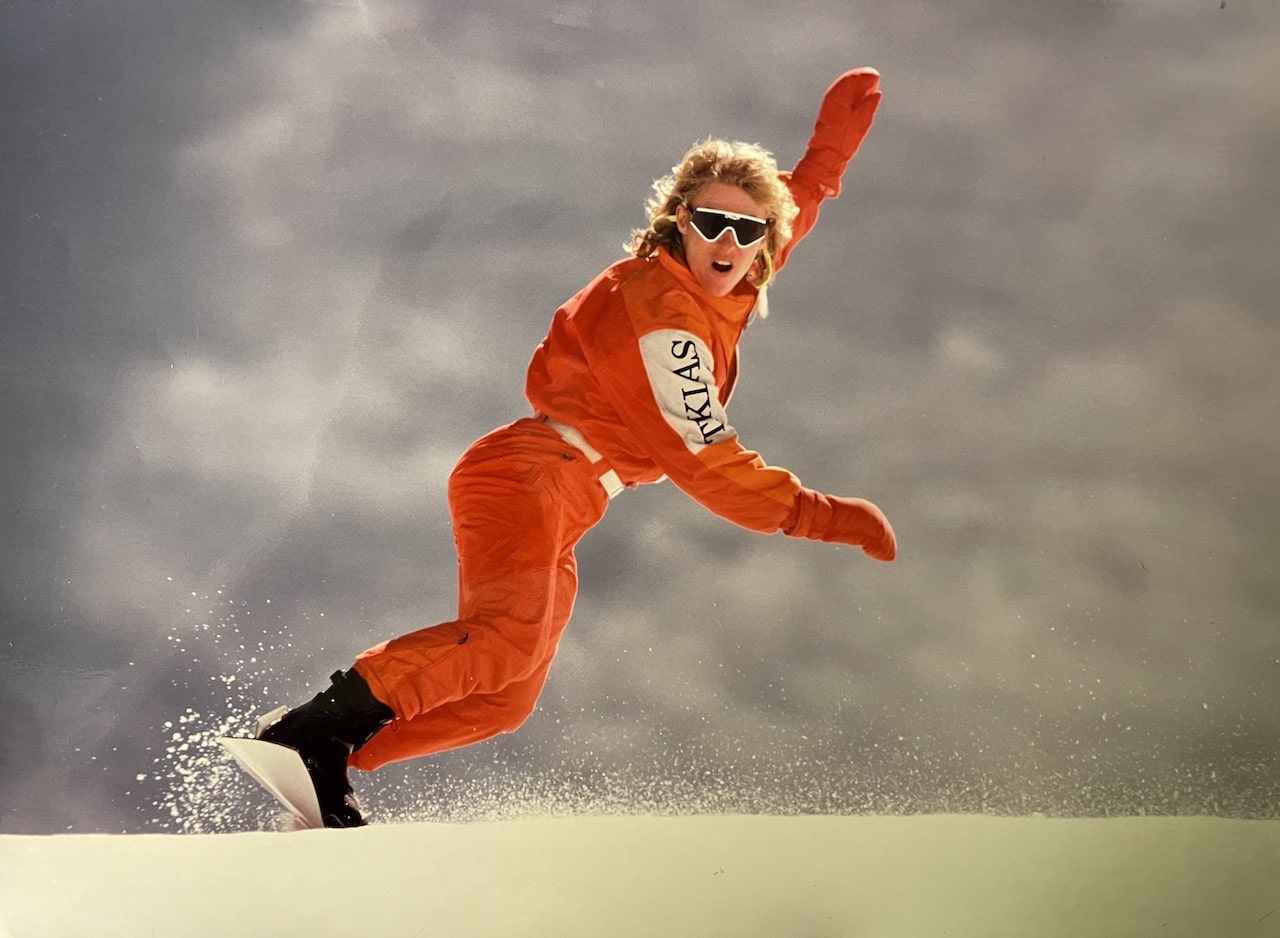
Caption: My first snowboard - a piece of molded wood with steel fins and "bindings" ordered from Tom Sims in the USA, ridden with Sorel boots. Location: Hoch-Ybrig, 1983/84.
What was it like to be there in the early days of snowboarding?
Of course, you can't compare snowboarding in the past (80s) with today. It was exotic, we were very few and not at all popular in the ski resorts. With the "snowboards" of that time, it was only possible to board in deep snow - no edges - fins and foot straps as bindings... Just "crossing" a slope was a risk.
Snowboarding was a real revolution - on snow - not "riding in the snow", but "surfing in the snow", across - on a board. A fascination for me that still continues.
Captions:
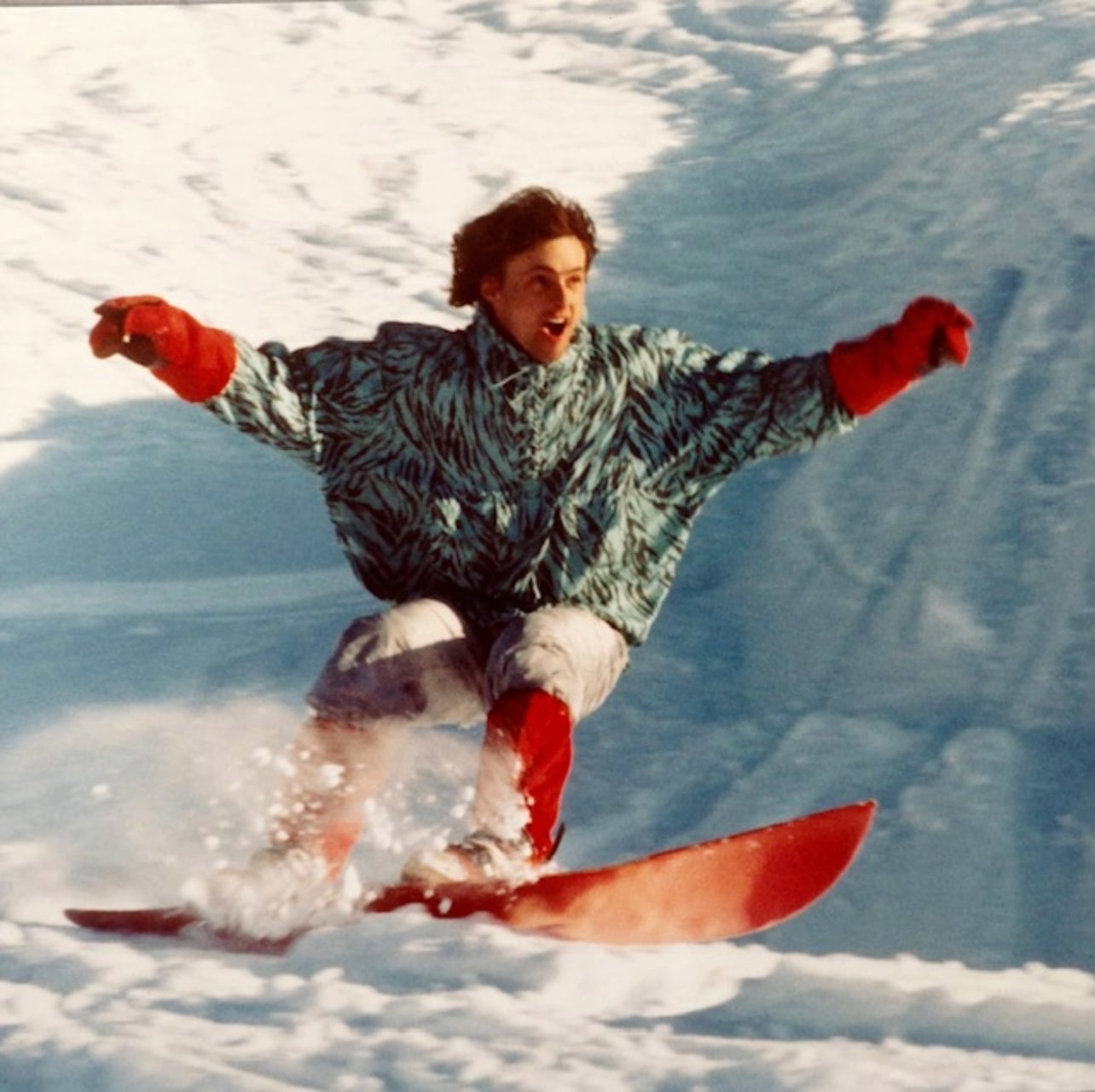
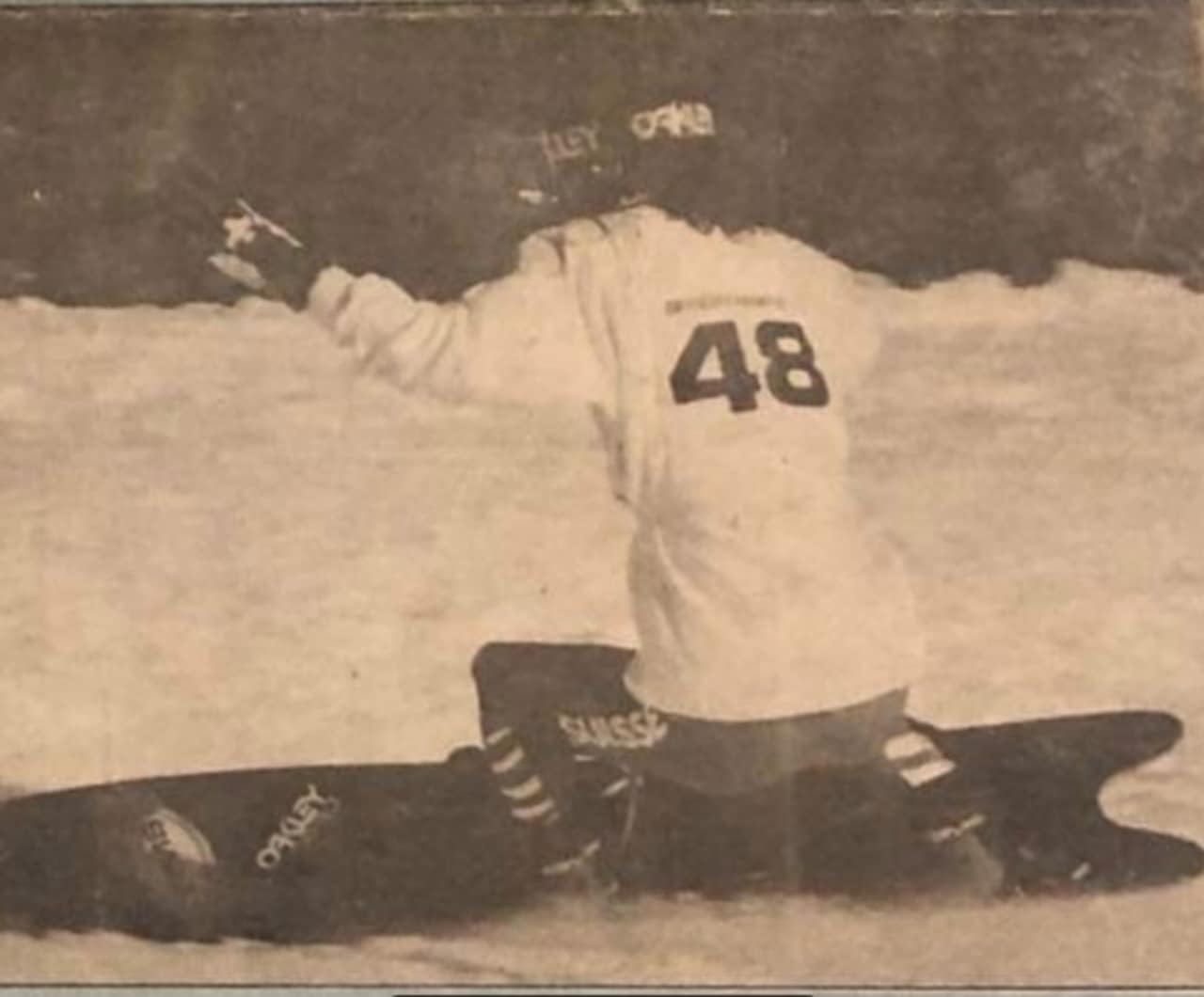
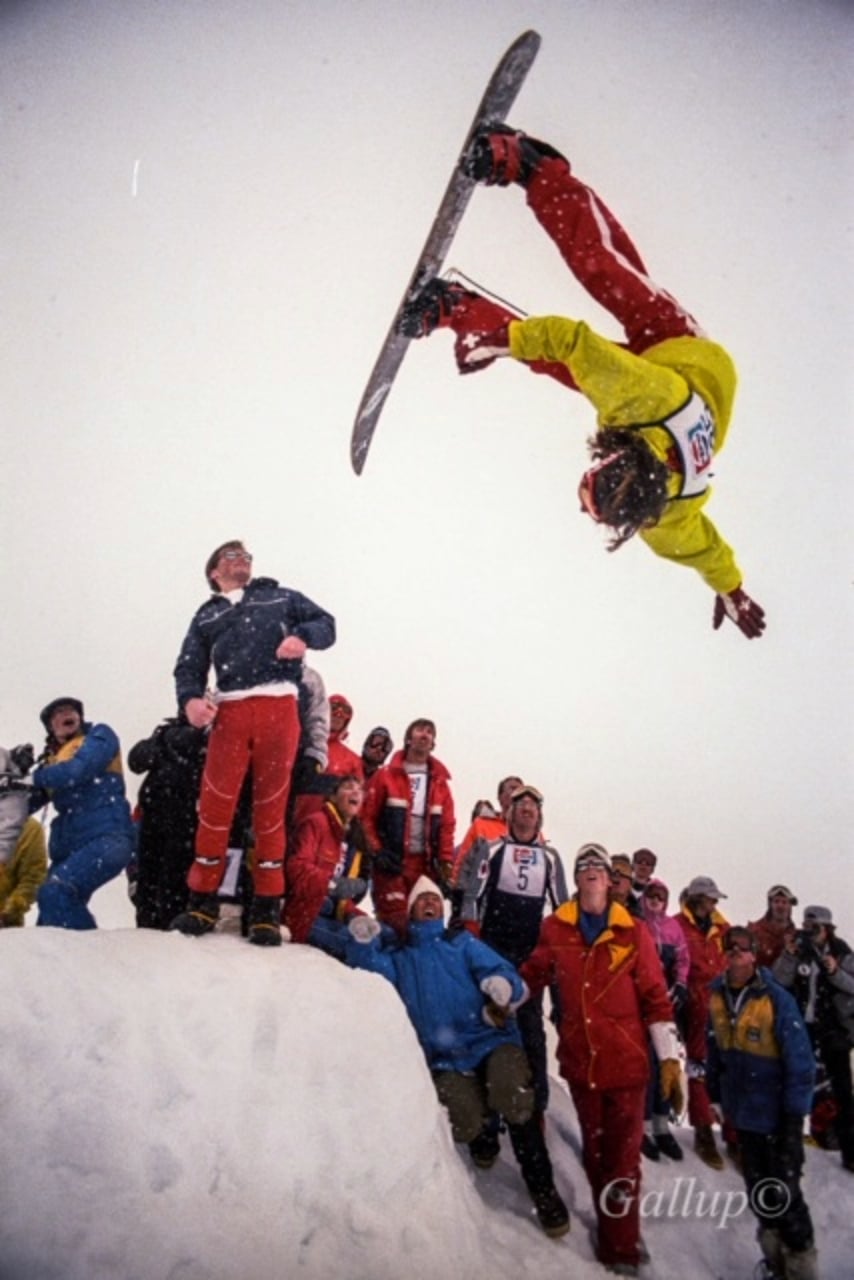
WORLDCHAMPIONSHIPS - Breckenridge, Colorado, USA 1985 Caption: Andy Tanner at the Snowboard World Championships in Breckenridge, Colorado, USA, 1985.
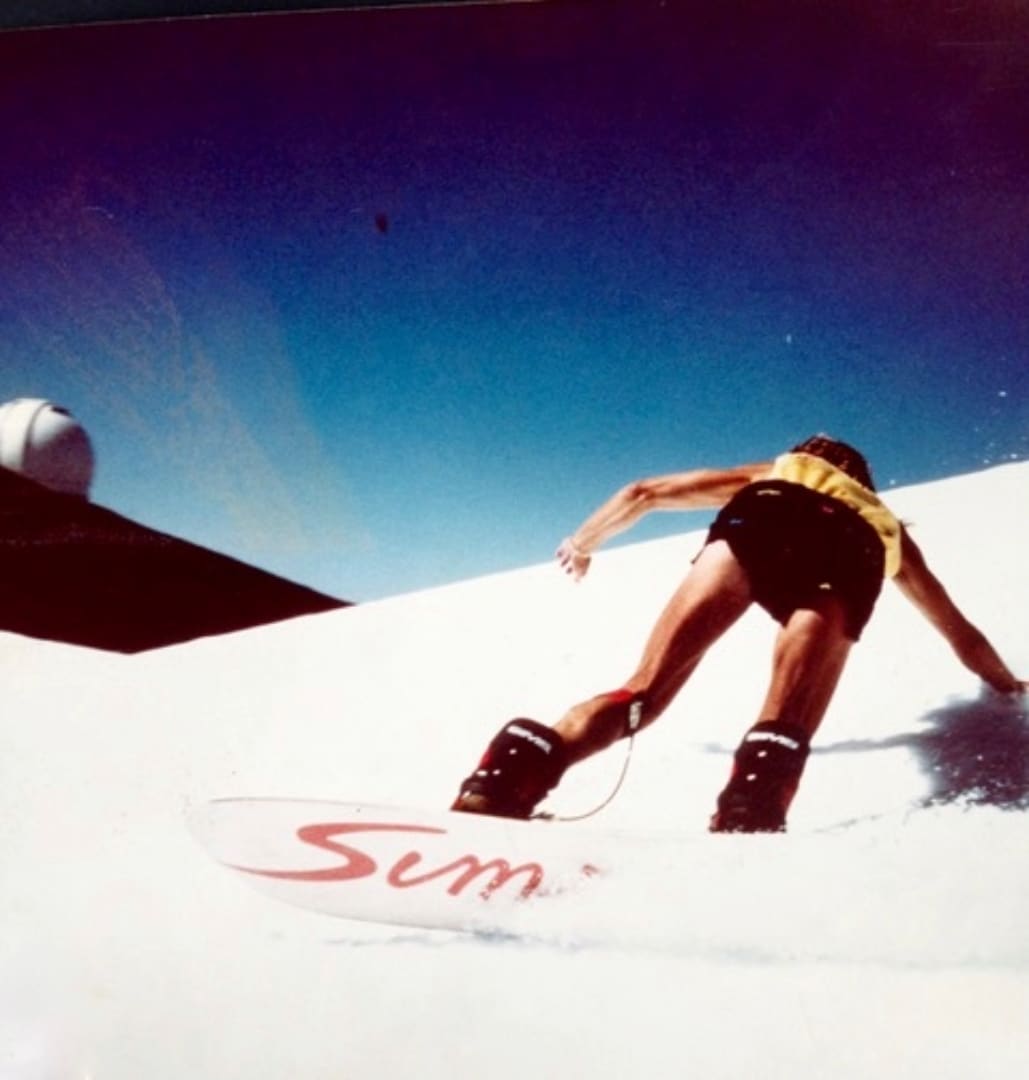
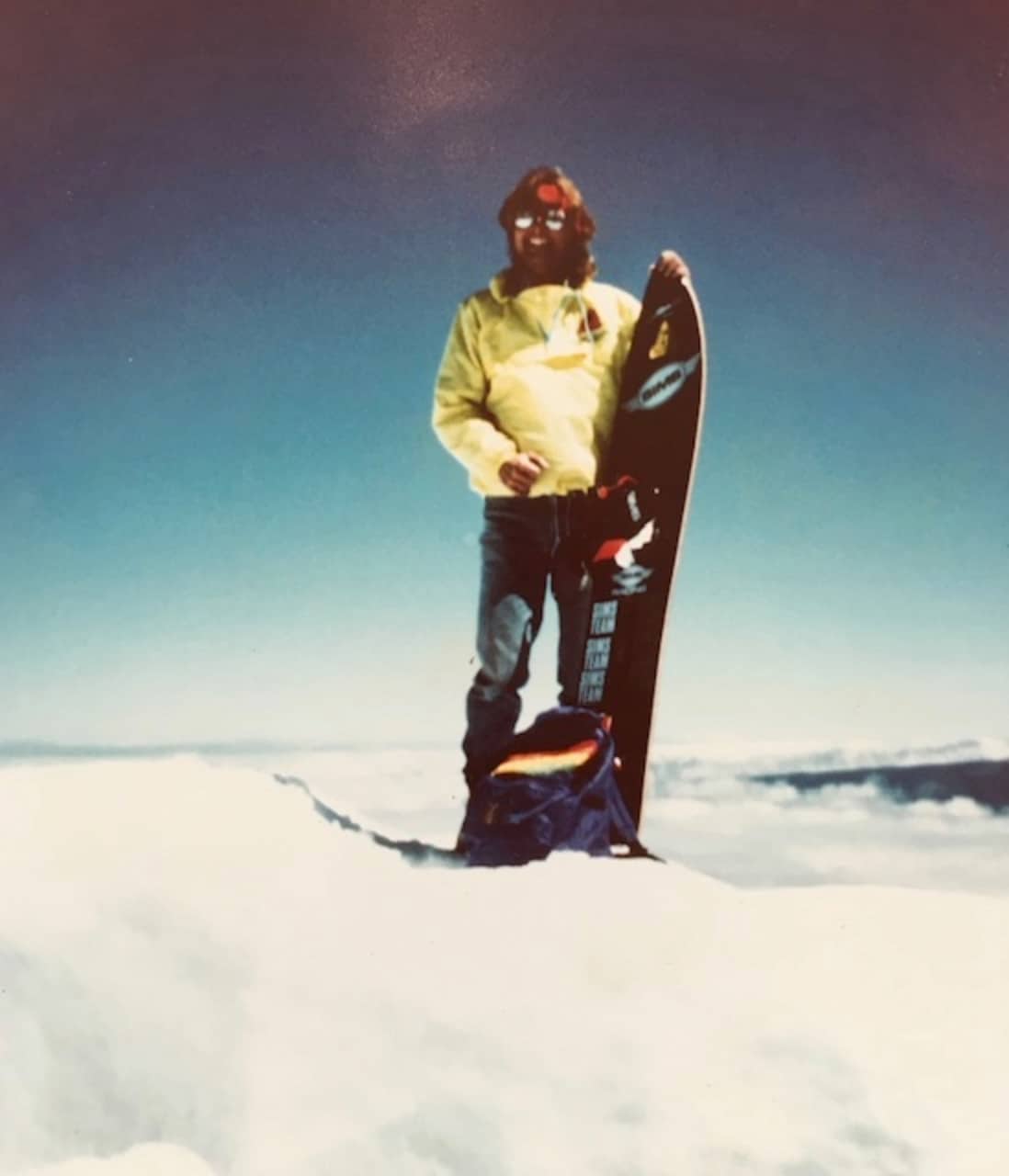
FIRST DESCENT - Into the crater at 4200 m, Mauna Kea, Big Island, Hawaii, 1984/85 Caption: Andy Tanner's first descent into the crater of Mauna Kea at 4200 m, Big Island, Hawaii, 1984/85.
What was the story behind the founding of Beach Mountain?
As quasi "first generation" snowboarders, Jose Fernandes and I were the first Europeans to travel to the USA and Canada to take part in the snowboard competitions. That was in 1985 and 1986. The Americans had invented the snowboard and were therefore already further along in the snowboarding "movement".
After returning from overseas, a whole winter of "snowboarding" and a title: North American Champion, and total enthusiasm for it, I spontaneously decided to open Switzerland's and Europe's first snowboard store - Beach-Mountain - in Zurich in 1985. At this point it should also be noted that snowboarding developed from the cities with a background in skateboarding and not from the mountain regions.
Back then, you couldn't buy snowboards anywhere in Europe. You had to contact the first manufacturers in the USA, etc. Right from the start, there was huge interest in the store and the new, revolutionary action sport of snowboarding. In addition to the hardware that I imported and sold from the USA, I added clothing, outerwear and, of course, skateboards in the summer.
As a result, the Beach Mountain was more than just a store where you could buy snowboards and everything that went with them - it was a real meeting place for interested, like-minded and fascinated people. The "Beach" became a hot spot for people from all over Switzerland and abroad.
Back then, we also organized movie nights at the Volkshaus with snowboard, surf and skate films. The Volkshaus was always totally full. Later on, the Beach Mountain always had visits from snowboard pros from all over the world, where we organized meet and greets. In retrospect, it's fair to say that the Beach Mountain store in Zurich made a significant contribution to the development and spread of snowboarding in Switzerland and Europe.
Captions:
North American Championships, Canada, 1984/85 Caption: Andy Tanner at the North American Championships in Canada, 1984/85.
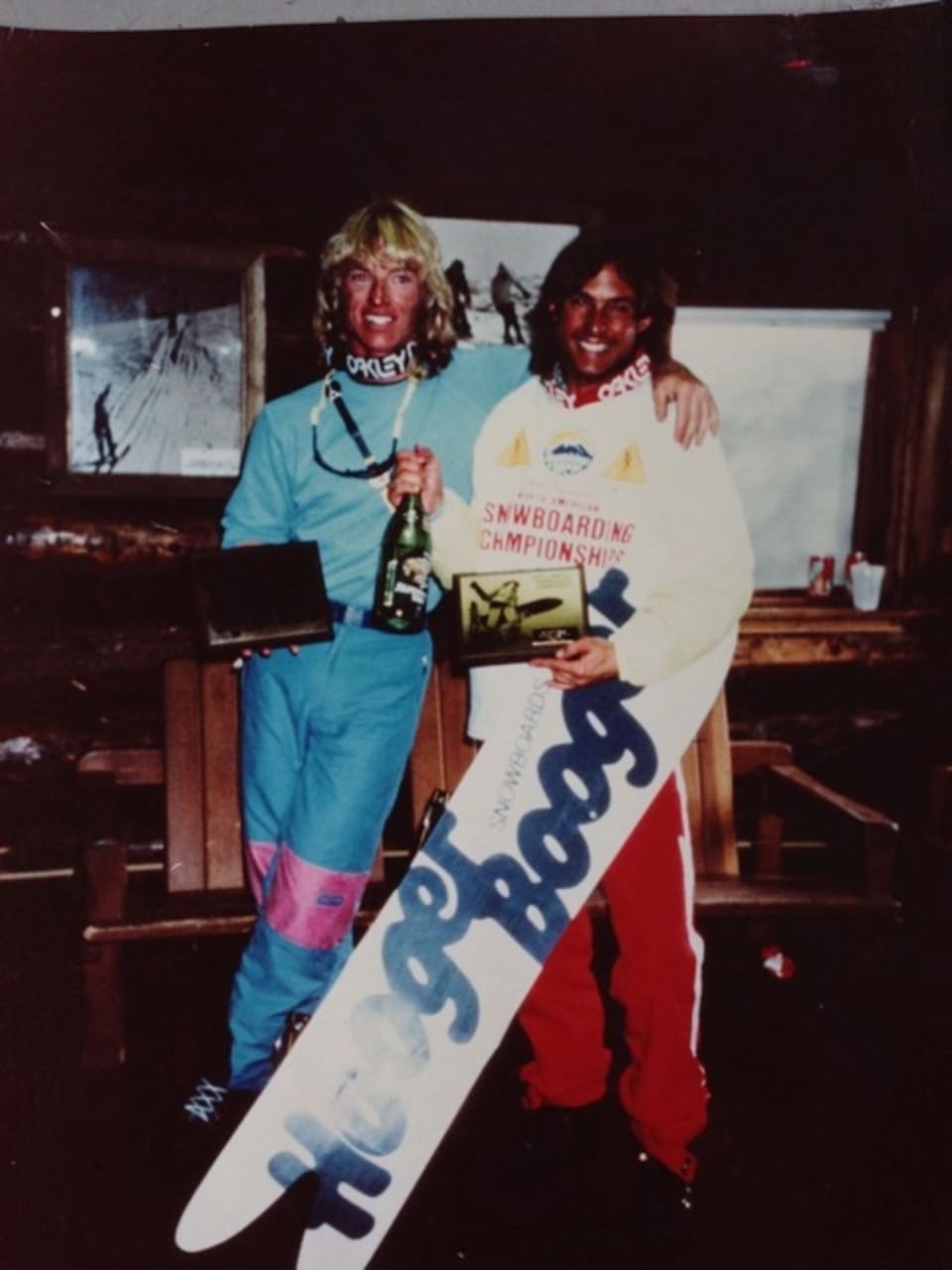
Best Manouevre of Contest, North American Championships, 1985 Caption: Andy Tanner winning the award for "Best Manouevre of Contest" at the North American Championships, 1985.
On the summit of Mauna Kea, Hawaii, 1984/85 Caption: Andy Tanner on the summit of Mauna Kea, Hawaii, with the special team roundtail sponsored by Tom Sims himself. On the road as a pro rider for SIMS, 1984/85.
What was the story behind +Alprausch?
As snowboarding and the market developed, this "lifestyle" became more and more widespread, and the demand for products such as clothing, accessories etc. specifically designed for snowboarding increased. People were now willing - in contrast to the past, when everything had to come from the USA - to take an interest in products from the "local garden".
So the time was ripe for +Alprausch, the brand for snowwear, streetwear and accessories with a touch of Switzerland. Created by riders for riders. With good quality, a connection to the Swiss mountain landscape and outdoor lifestyle. Sustainably produced in Europe, long before sustainability was the buzzword. To my own surprise, the brand really took off and we were able to delight fans and friends worldwide with our creations.
As a result, we were able to open six +Alprausch stores and were on the market with retailers in 10 countries. Now 23 years have passed since the brand was founded and it is still on the market - the story continues.
... once a "Brättlibueb - always a "Brättlibueb ...
Are you still active on the snowboard?
I'm still snowboarding at the age of 65 and haven't switched to skis like most of my friends. My aim is to board for as long as possible. I'm also active on the skateboard... once a "Brättlibueb" - always a "Brättlibueb"... life moving sideways.
The fascination has remained the same, only the body is slowly not allowing as much as it used to.
Enthusiasm, active commitment, passion and a bit of rock-n-roll are attributes that were the driving force behind the creation at every stage.
We have been running a unique event location in our +Alprausch-Fabrik in Zurich's Kreis 3 district for some time now. Where we have had our offices, showroom, warehouse etc. for 35 years. A location where you can organize company dinners, birthdays, presentations, etc.
Our latest concept is Rocket Gran, the somewhat different wool store. Nicole, my life partner, prototype designer and knitting and crochet luminary, inspired us to create it.
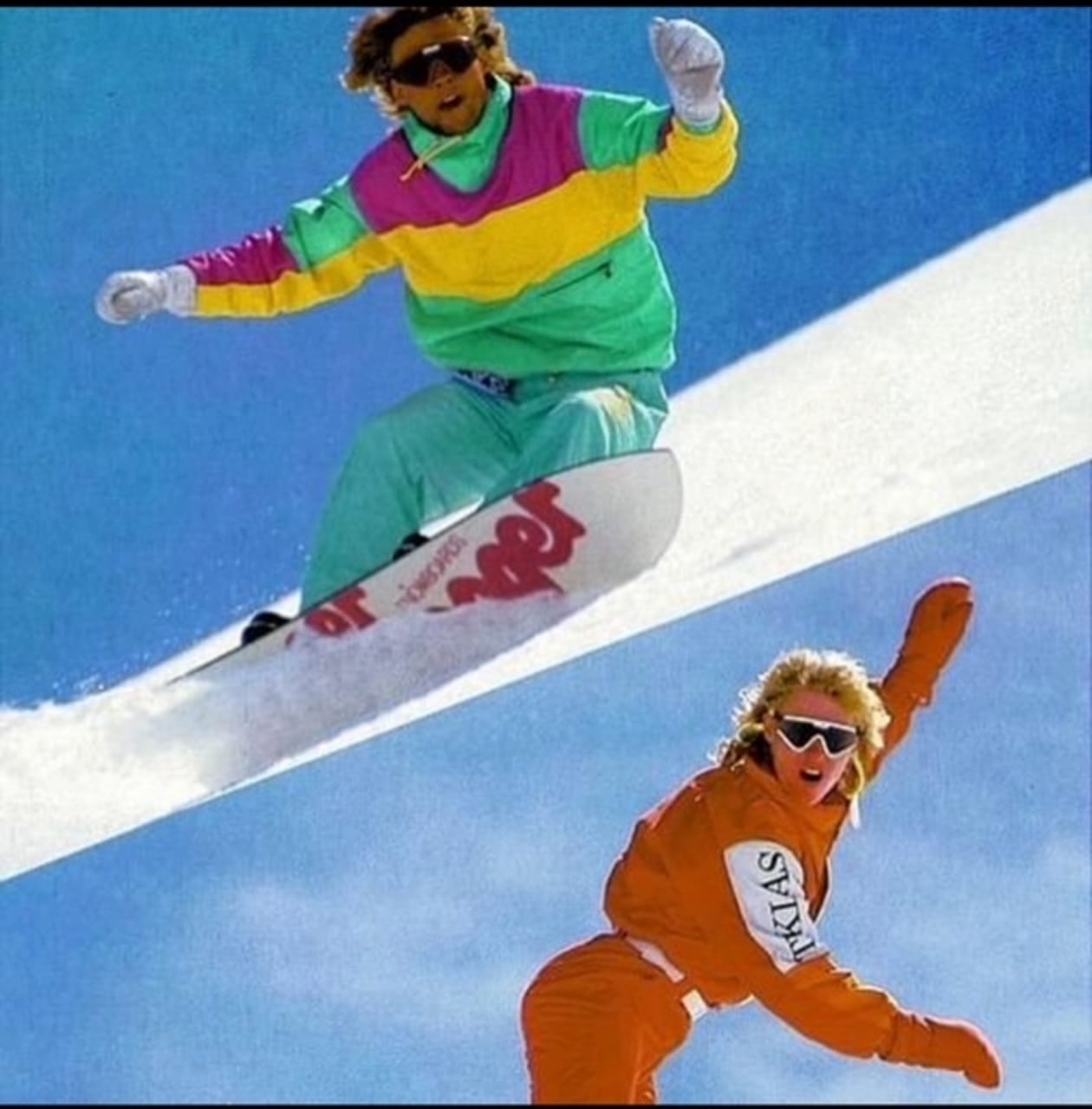
Caption: Andy Tanner and José Fernandes, both sponsored for the Hooger Booger catalog in 1986. Andy knew José, a true legend of the scene and one of the first snowboard world champions, very well.
How did you experience the founding and development of Radical?
When Radical was founded, I was an active member with Mark Farner. I can still remember very well how Mark and Marco Franzoni built the first handmade snowboards in the basement of the old villa on Bellariastrasse in Zurich. Wood and fiberglass, laminated like surfboards, swallowtail with loop bindings and giant fins on the sides. From then on, things progressed rapidly. The slide slides that we shot from our deep snow rides on weekend snowboard trips in Hoch Ybrig or Andermatt were celebrated on long evenings on Bellariastrasse in Zurich, which awakened our hunger for more boards and powder.
In your opinion, how did the 1987 World Championships in St. Moritz influence the further development of the sport?
Radical was one of the key brands in the history and development of snowboarding in Switzerland. With tireless enthusiasm, Mark Farner has been committed to this new sport from a very early stage.
With the organization of the World Championships in 1987, the "sport" of snowboarding arrived with a lot of media presence and coverage, with fantastic, dynamic images, even on TV for the "normal citizen". The following winters then triggered the great "snowboard revolution".
Are there any special moments or anecdotes with Mark Farner that you would like to share with us?
There are of course a few special moments with Mark Farner. The most important are the ascent in Hoch Ybrig at the end of the Sternen lift, walking through the deep snow up to the ridge, marveling at the panorama and the slope in front of us and then enjoying the "Weglosen" with big powder turns. Moments like these stay in your memory for a lifetime.
Would you like to send us a message to celebrate Radical's 40th anniversary?
Congratulations on 40 years of Radical! An impressive and unusual success story and a brand that has played a key role in the "snowboard revolution" and continues to do so.
Thank you very much for the interview Andy!
Picture: André Tanner - still a creative and versatile maker today.
Radical Legends: Our story, told by those who shaped it
To mark our 40th anniversary, we took a trip down memory lane and visited a few selected Radical legends from our eventful history.
It is with great pleasure that we invite you to immerse yourself in history with us and relive the special moments. We will be publishing more exciting conversations until the end of winter - so stay tuned and be inspired!
Have you been with us from the start or do you have a question? Share your thoughts with us - we look forward to your comment!
We are proud to welcome snowboard legend José FernandesEurope's first world champion, for an interview.
In an exclusive interview, José gives us exciting insights into the beginnings of snowboarding, his personal highlights and the development of the scene over the last few decades.
Look forward to inspiring stories and anecdotes from the time when snowboarding was still a crazy adventure.
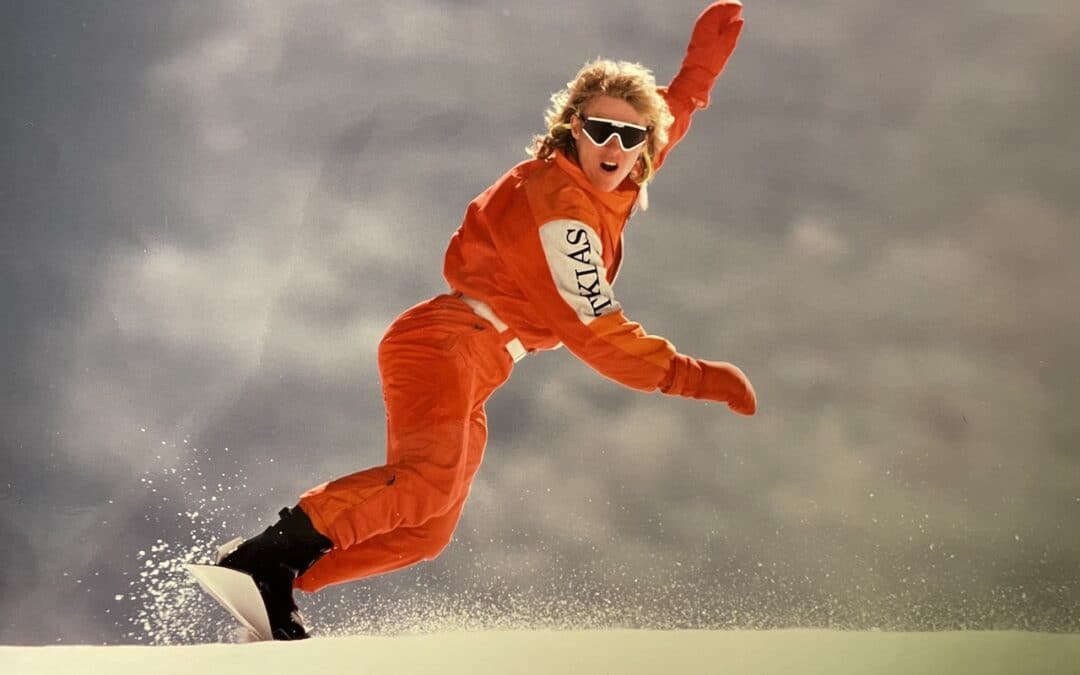
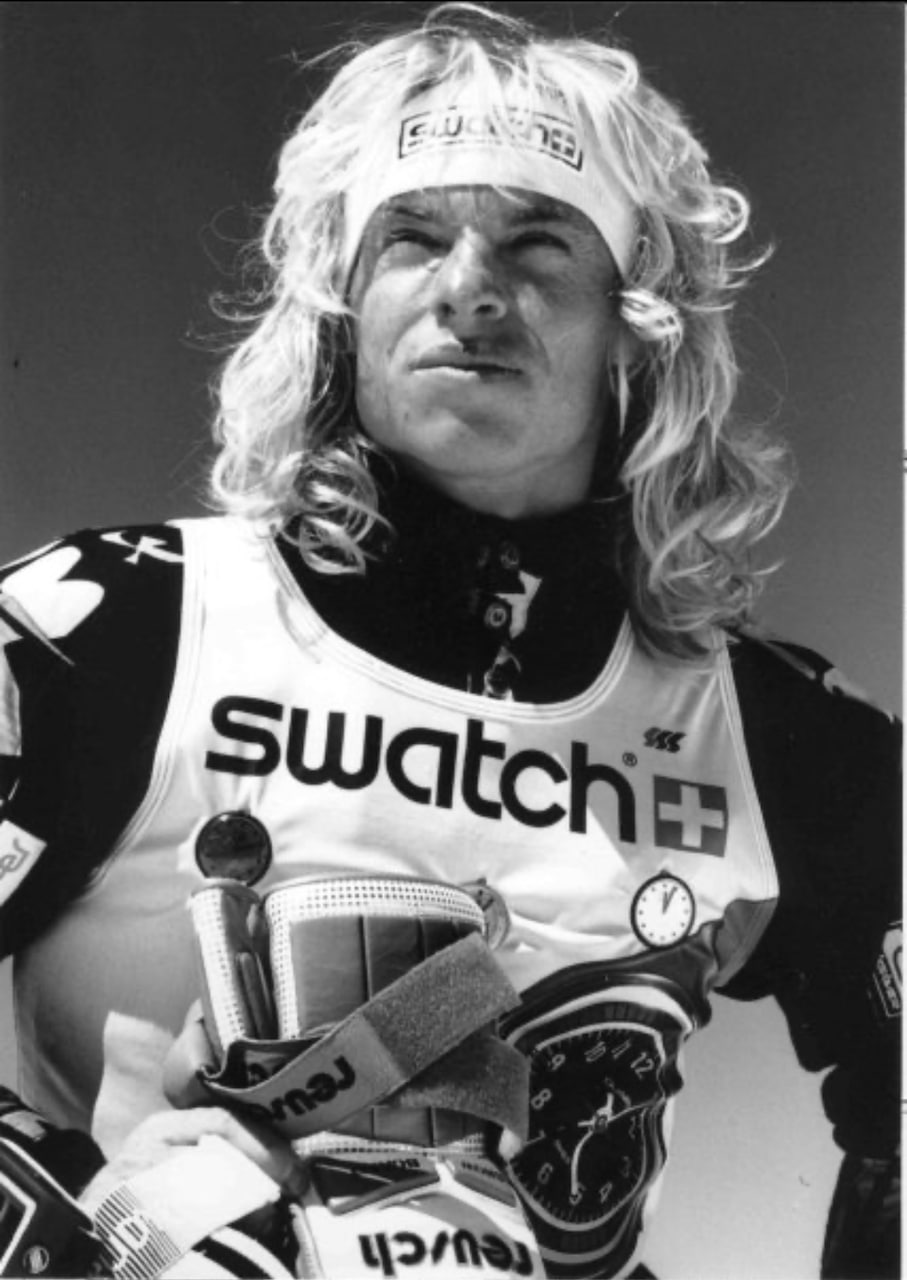
Caption: José Fernandes, the first snowboarding world champion from Europe, shaped the snowboarding scene like no other and is a true legend.
... Snowboarding was for us in winter sports what rock'n'roll was in the music world. Anti-establishment. ...
Please introduce yourself briefly.
My name is José Fernandes, son of a Swiss mother and a Portuguese father. I went to primary and secondary school in Wallenwil/Eschlikon TG.
The hills of the "Hinter-Turgi" were my playground. Skiing, skateboarding, cycling and then, at some point in the late 70s, my first attempts at snow with an ironing board, which eventually became the first snowboards.
When and how did you first get to know Radical?
The Radical Snowboard Club Zurich was the first point of contact, at the same time as the first boards that Mäge Farner had built. In 1986, the first CH championships in St. Moritz and a somewhat angry Tom Sims, who was not so amused by the shape of the first Radical models.
A long friendship with Mäge began. Mäge was soon to build my prototypes for the competitions. That was when I was a Sims team rider and then also a Renault Snowboards rider...
Tell us about the Goldvreneli Board.
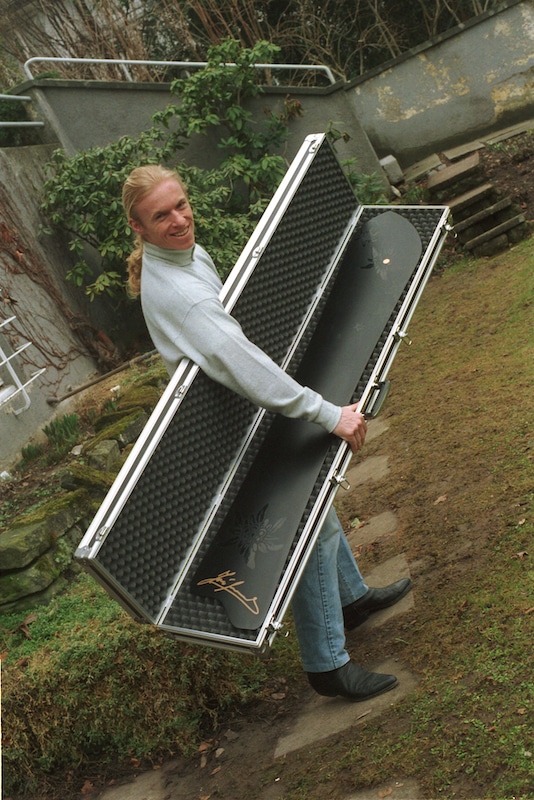
Together with Radical, we were ahead of our time and designed a board that would cost well over CHF 2,500. All in black, with a gold vreneli embedded in the shovel and gold-plated Fritschi plate bindings. There was also a long aluminum case for stylish storage and transport.
Needless to say, nobody wanted the thing and not a single model was sold. A few years later, the two models were stolen from my garage in Nice and never turned up again.
Caption: José Fernandes with the legendary Goldvreneli board, a special model manufactured by Radical.
Can you remember the first time you saw or tried out a snowboard?
The Swiss Landsurfers Club (skateboard club from Zurich) was the main place where the first pictures from American skateboard magazines were passed around. There was no video, YouTube or Google yet. Only photos.
Then everyone made their own at home. A skateboard with two small skis under the axles. You could only ride straight ahead and practise handstands. Aluminum-wood-aluminum laminates from the Swissair workshop were the first boards that worked successfully in deep snow. First Sims snowboard ordered from the USA. Without steel edges, without a base, without bindings, but with three fins... The snowboards "Made in the USA" lasted about three weekends before they delaminated and disintegrated.
But the feeling when we realized that we were having far more fun than skiers with enough powder snow, steep and virgin slopes, was unstoppable with our happiness hormones and endorphins.
What was it like to be there in the early days of snowboarding?
In the beginning, it was an incentive to continue skateboarding during the long winter months and on wet roads. Hence the sneakers with plastic bags as footwear. But it soon became clear that the opportunities to explore and show off our mountain world in Switzerland with these new "ironing boards" fired our imagination and it was our chance to be different. Snowboarding was to us in winter sports what rock'n'roll was in the music world. Anti-establishment.
Captions:
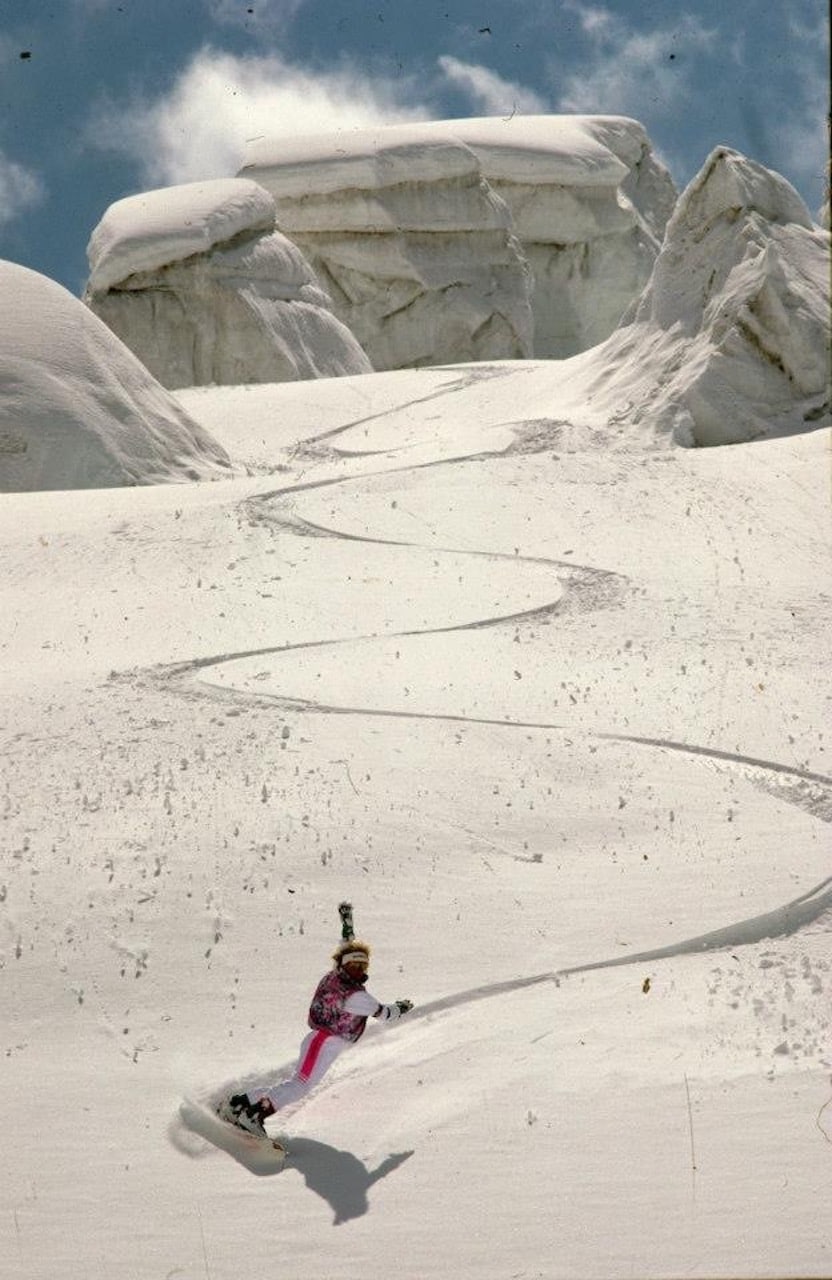
Glacier descent Caption: José Fernandes during an impressive descent on the glacier.
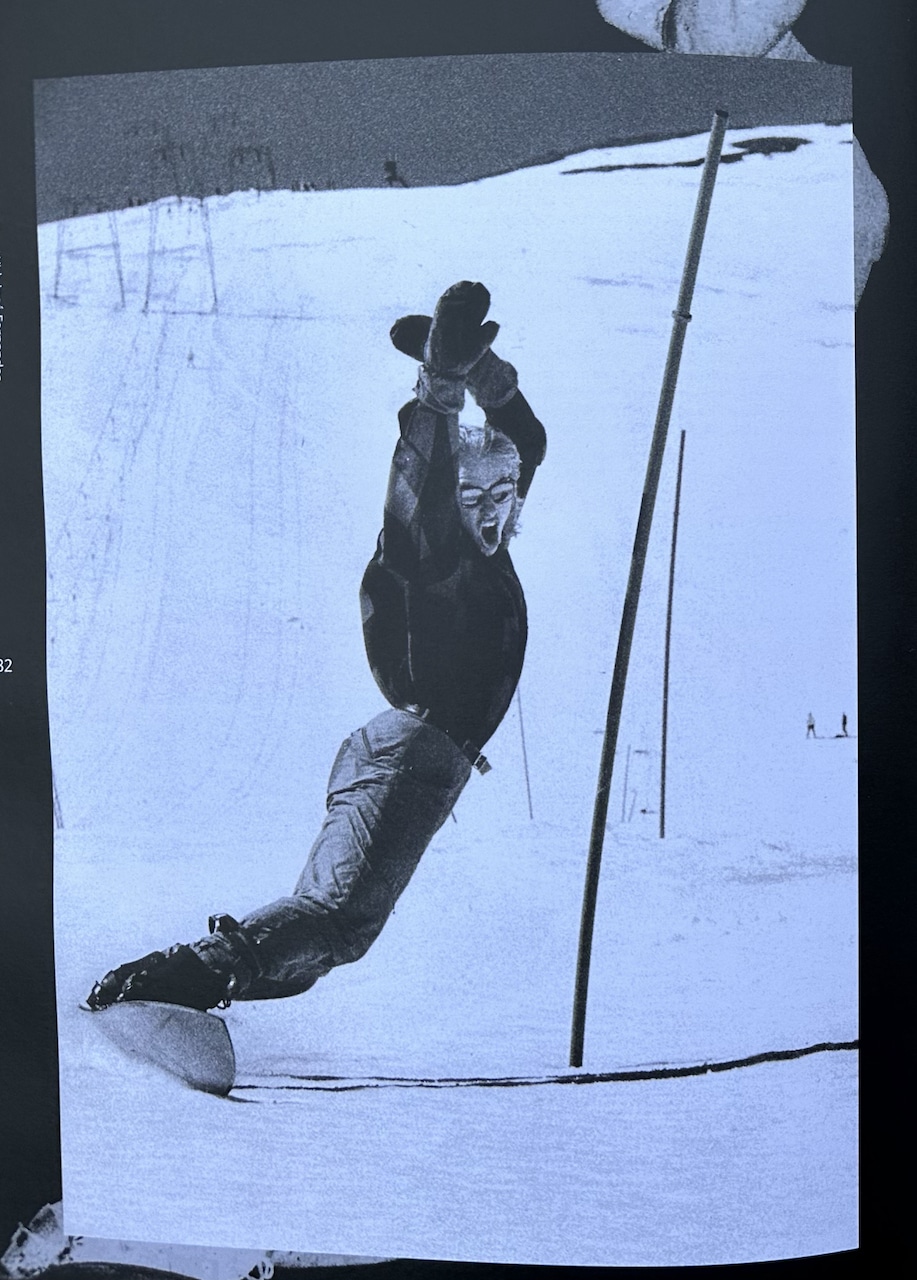
Slalom training with poles Caption: José Fernandes during intensive slalom training with poles - perfecting the technique for the competition.
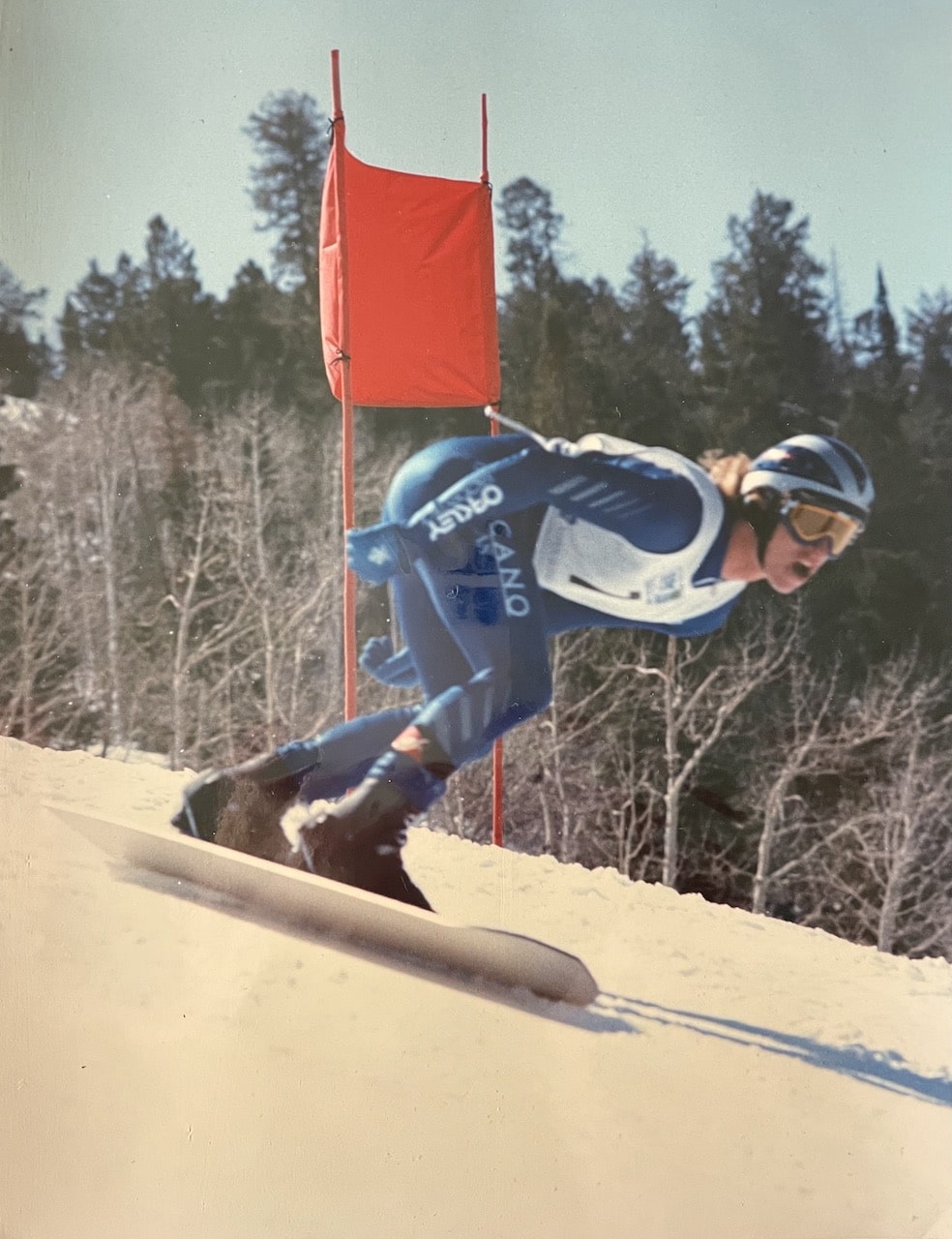
Downhill competition Caption: José Fernandes in full action during a competition downhill - speed and precision at the highest level.
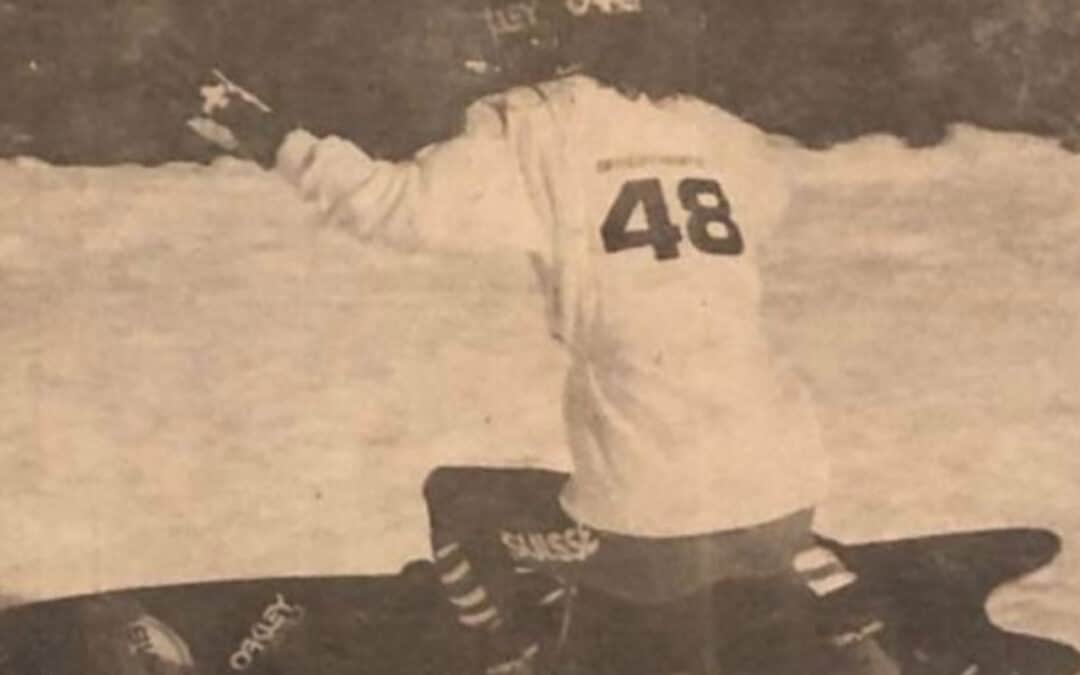
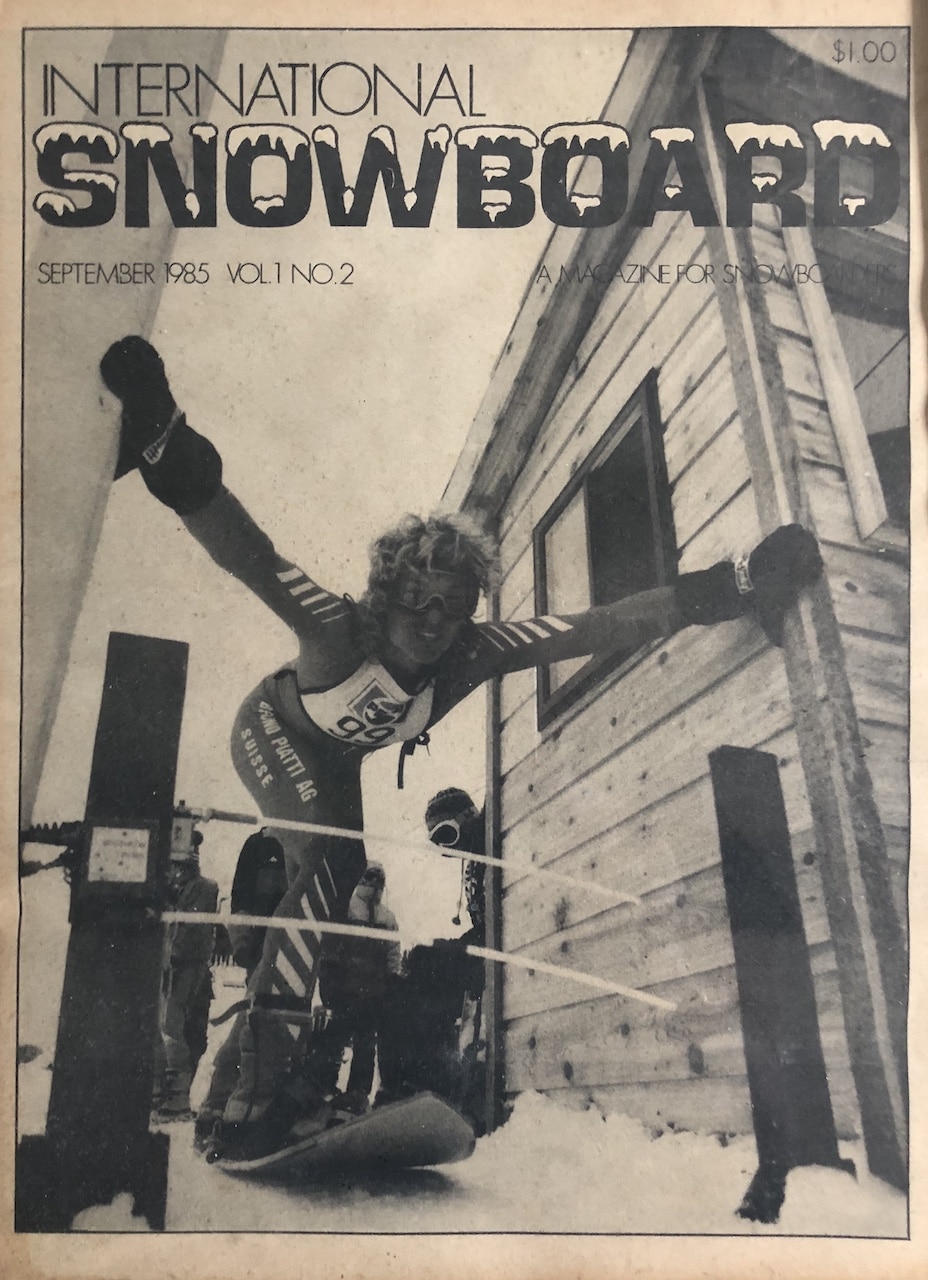
José Fernandes on the cover of Snowboarding Magazine, 1985 Caption: José Fernandes, the first snowboarding world champion from Europe, on the cover of Snowboarding Magazine, 1985 - a milestone in his snowboarding career.
... No, no, you're not going up there with those skirmishes! ...
Are there any special moments from the early days of snowboarding that you would like to share with us?
I think the list is endless. There are thousands of stories. It's really difficult to dig up one or two stories. But perhaps the story about the bribery strategies of lift staff in almost all ski destinations.
Buying tickets was still quite normal. But when we got close to the lift guys with our boards, we were told ... "No, no, you can't go up there with those skis!"
It's almost impossible to imagine today. But that was our everyday life. So we decorated chocolates and wine bottles with snowboard labels and bribed the boys. And where that didn't help, we cut off the tips of old skis, fitted the bindings to the front and put them on for transportation, then stowed them away in our rucksacks ...
When I flew to America/Canada for the first time in 1985 to take part in a competition, all the Americans from the magazines were there:
Tom Sims, Mark Heingartner, Andy Coghlan, Terry Kidwell, Bob Klein. They all asked me how many snowboarders there were in Europe. None of them had us on their radar. And then someone like that comes along with sponsors and rides straight onto the podium with the pros and onto the cover of the first snowboard magazine.
The beginning was characterized by the fact that we all knew each other and helped each other to get material and try out new things. Repairs and new developments during the week were almost as important as the weekend in the mountains. Two runs with four turns, you were the hero. Then it was off to the workshop again because something was broken.
No wonder I had no time or interest in school and was thrown out of grammar school on edge.
What are your greatest and most memorable successes?
To be honest, I have to say the world championship title in 1987 in Breckenridge, Colorado, and sharing the podium with the legend Craig Kelly. But for me, all the titles (World Champion, European Champion, Swiss Champion) and all the other trophies are not more important than the long-standing friendships, the network and the annual contacts with all these great people, the pioneers and legends of our sport, which continue to this day.
What impact did the World Championships 87 in Livigno/St. Moritz, which Mark and the Radical Snowboarding Club Zurich organized, have had on the sport?
I think that the Radical Snowboarding Club had already laid the foundations for international competition the year before with the first open Swiss Championships in St. Moritz. The World Championships in Livigno and St. Moritz subsequently brought snowboarding competitions into the media for the first time. Sponsors, prize money and titles for the athletes made professional sport and its rapid development into an Olympic discipline possible.
Captions:
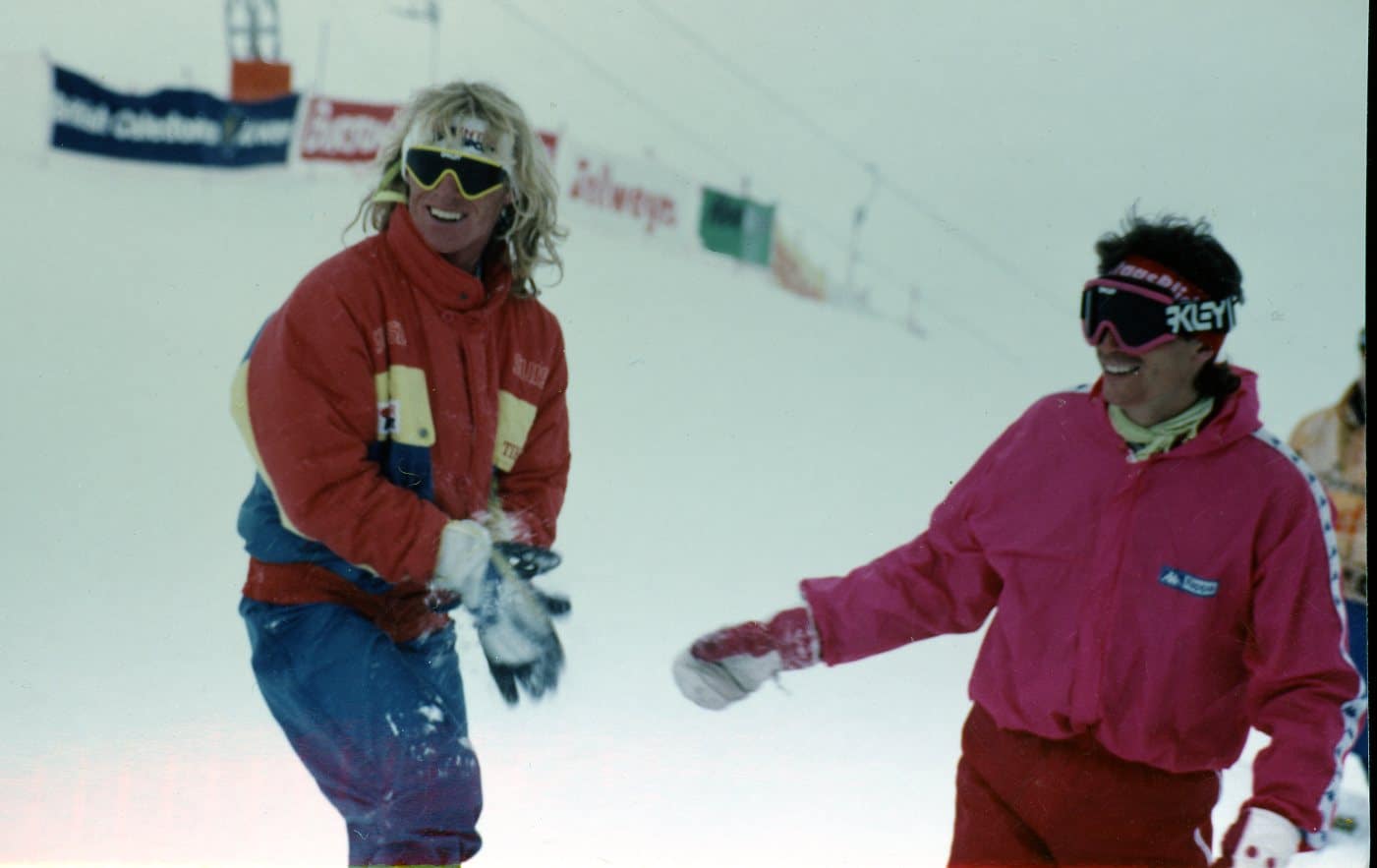
José Fernandes and Mark Farner at the 1987 World Championships Caption: José Fernandes and Mark Farner at the 1987 Snowboard World Championships - two pioneers of the snowboard scene exchanging ideas.
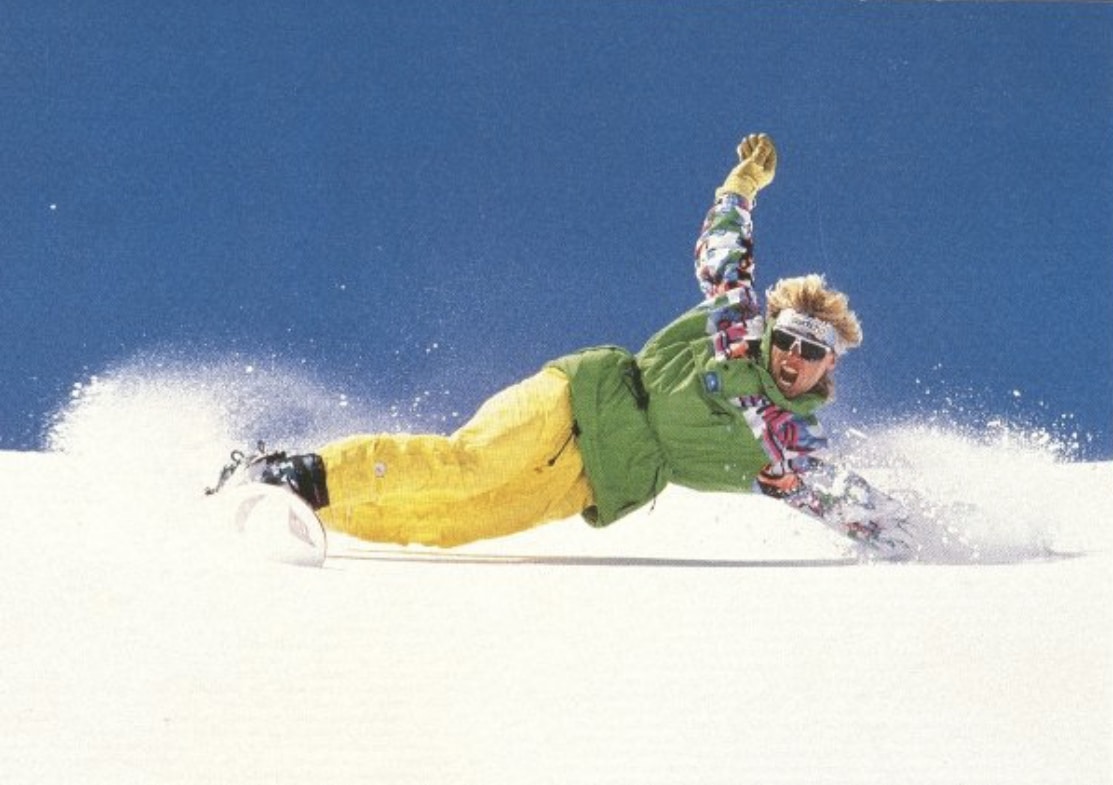
Carving pose Caption: José Fernandes in a powerful carving pose - perfection and style on the slopes.
Laydown Caption: José Fernandes doing a laydown - an impressive demonstration of his control and technique in snowboarding.
What advice would you give young snowboarders today?
The snowboard story is far from over. If anything, the first cycle has just come to an end. Snowboarding has brought the freestyle lifestyle to the winter sports industry, revitalizing and animating an entire sector of the economy. Now snowboarding is looking for its identity and will reinvent itself, but it is here to stay.
An old hand like me can only say to young athletes: don't lose the fun and joy of going out on the board every day. Find the intrinsic motivation to be unconventional and to make impossible things tangible and try them out.
It strengthens the personality and is a basis for all situations in life. Snowboarding is not just a sport, but a way of life.
The best study program I could get - without a high school diploma ...
How did you experience the founding and development of Radical?
As I said, friendships have developed that still last to this day, even if we don't see each other every day. The respect for what we have achieved is mutual and always present. Mäge Farner had set out on his path back then and we followed in his wake. He has remained true to his passion to this day, and that is what makes Radical what it is - then as now.
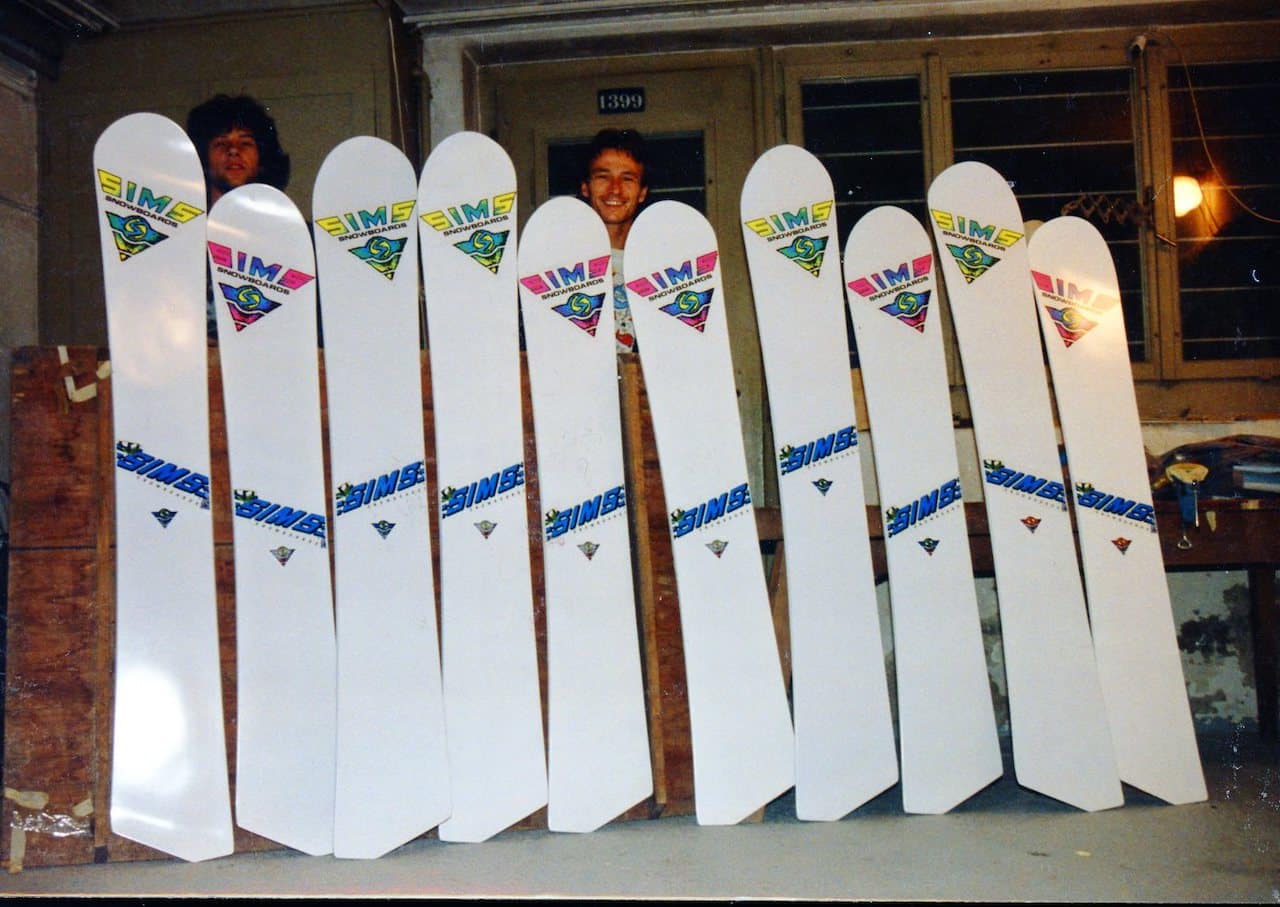
Caption: Mark Farner and workshop manager Bruno Baeza proudly present the Sims pro boards manufactured by Radical - a significant moment in snowboarding history.
How do you think Radical has influenced the sport?
There was a time when Radical made the prototypes of the world's best snowboarders. Incidentally, this is the reason why Jake Burton was never able to persuade me to ride for Burton. My condition was always to be allowed to ride my own boards (Radical from Mäge). Jake didn't want that, and back then Burton boards weren't exactly the crème de la crème ... 😉 Things are different today.
Mäge with Radical has significantly shaped and driven the development of the boards. Back then, the acceleration in research and development was weekly, not annual.
How have you experienced the development of snowboarding in Switzerland and worldwide?
The level of the athletes has become absolutely incredible. I have the utmost respect, especially for the Swiss, who keep at it and deliver top performances in the World Cup. I always enjoy being a guest at the OPEN in Laax. There's nothing like seeing and experiencing the spectacle live. Who would have thought that almost 40 years ago, when we snowboarders still had to shovel our halfpipes by hand.
Freeride, freestyle, boardercross and halfpipe - everything has its place and brings the sport to television.
But it is the personal experience of sliding down a slope like the Hawaiians on their wooden planks in the surf when they met Captain Cook that makes them successful.
This feeling can be practiced with ease by people of all ages and backgrounds - alone or with friends. Above all, this has spurred the breakthrough and is still the reason why so many people are discovering snowboarding for themselves today.
How do you see the future of snowboarding?
The snowboard scene is currently experiencing a return to its origins. New concepts, techniques and possibly even new disciplines are emerging from this movement. One example of this is the "Natural Selection" format initiated by Travis Rice, which combines freestyle tricks with freeride art on natural terrain.
With advanced visualization capabilities and modern 360-degree cameras, snowboarders can capture their experiences in a more immersive way. Cameras such as the Insta360 X4 offer 8K video recording and enable impressive all-round shots.
These technologies allow us to delve deeper into the world of snowboarding and make the experience even more tangible.
It remains exciting to see what developments and innovations the future of snowboarding has in store.
Would you like to send us a message to mark our 40th anniversary?
Stay alert, don't close yourselves off, remember that your roots lie in the curiosity and tireless drive to try new things of your founder Mäge Farner. Don't be satisfied with second best ... Radical stands for pioneering art and excellence in winter sports.
Thank you very much for the interview José!
Caption: José Fernandes, today a successful businessman
Radical Legends: Our story, told by those who shaped it
To mark our 40th anniversary, we took a trip down memory lane and visited a few selected Radical legends from our eventful history.
It is with great pleasure that we invite you to immerse yourself in history with us and relive the special moments. We will be publishing more exciting conversations until the end of winter - so stay tuned and be inspired!
Have you been with us from the start or do you have a question? Share your thoughts with us - we look forward to your comment.
How do I store my skis and snowboards properly in summer?
The end of the season is approaching and with it the question of how to look after your skis and snowboard after the last run of the season and how best to store your ski equipment.
With our tips, you will still be able to enjoy your equipment next winter.
Skis and snowboards should be thoroughly cleaned and dried after the last use.
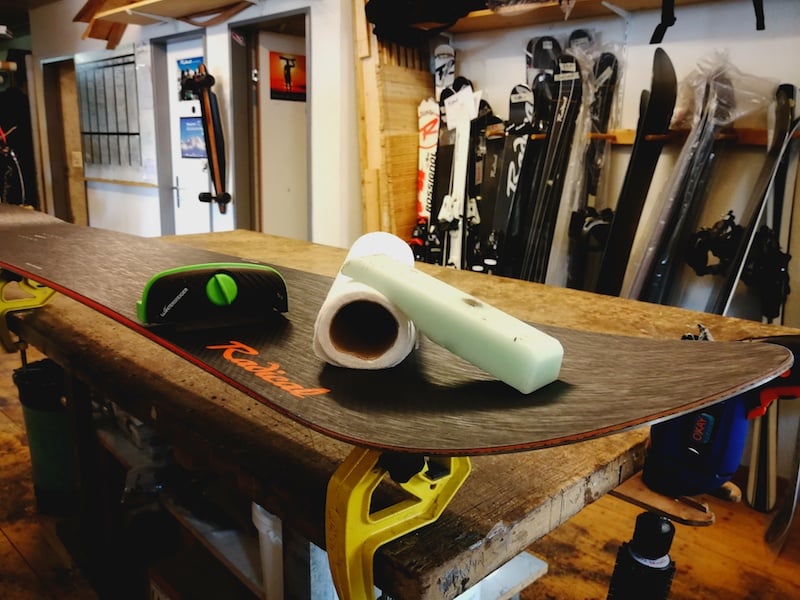
If the running surface of the skis or board is damaged, it should be repaired with a repair candle or have a professional base patch carried out by a specialist before storing.
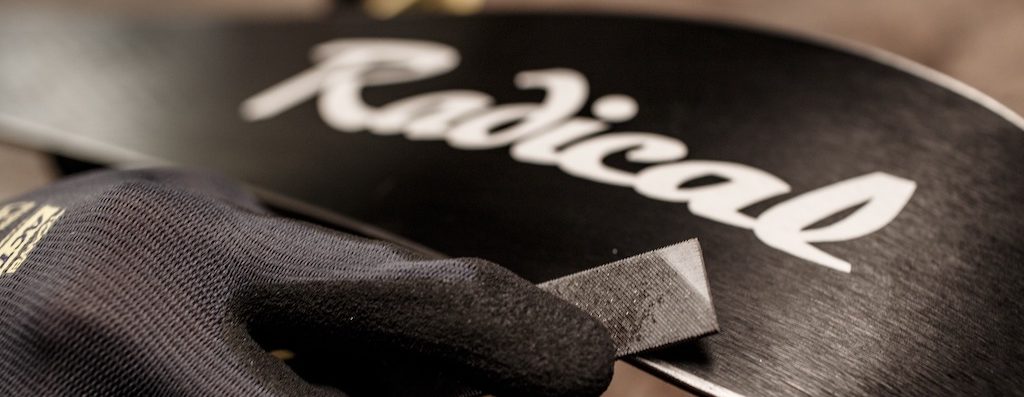
If the edges are rusty, sand them down before storing to prevent them from spreading.
The tread and edges are then sealed with a small layer of hot wax, which is not removed.
This ensures that the edges are optimally protected against rust, the tread cannot dry out and remains elastic.
Before the start of the new season, all you have to do is remove the excess wax and use a base brush to expose the structure of the ski or snowboard again.
They should be stored in a dry place protected from the sun.
It is best to set them upright and lean them against a wall individually to relieve the strain on the products.
However, make sure that they are protected from falling over.
Most edge crushes occur due to a fall onto the concrete floor in the garage.
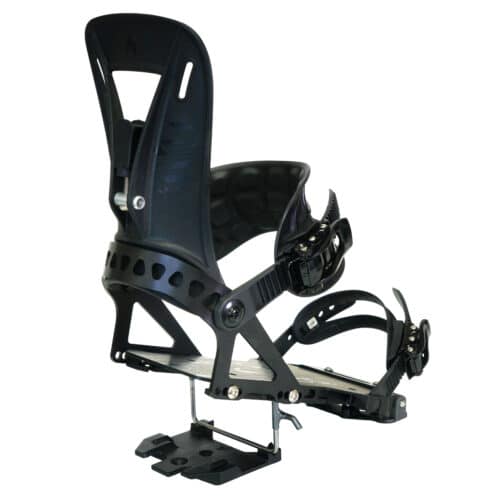
Bindings Also clean the binding with soap and water and then spray with binding spray. This protects against oxidation and corrosion.
For touring bindings with the PIN system, we recommend storing them with the toe pieces closed.
This relieves the load on the spring.
Ski and snowboard boots Ski and snowboard boots should be cleaned of dirt after the last use, then aired out well and dried before they are stored in the cellar or attic.
For snowboard boots with a Boa system, tighten the laces and then open the wheel.
This ensures that the boot retains its fit and the Boa system is relieved.
For ski boots, remove the inner boots for drying and only put them back in the hard shell after several days of drying.
You should make sure that the inner boot sits in the shell without creases and then close the buckles of the ski boot loosely.
This ensures that the boot retains its fit and does not deform.
Service and repairs at Radical We are happy to carry out the necessary work on your skis and snowboards.
We offer expert service and repairs of all kinds. Also for other brands.
Our tips to keep your service as cost-effective as possible: – Leave your snowboard bindings at home.
– Remove any layer of wax at home.
From May, appointments can be made on request.
We wish you a great start to the summer!
Der Winter neigt sich dem Ende zu, und mit ihm stellt sich für dich die Frage, wie du deine Ski und dein Snowboard nach der letzten Abfahrt der Saison pflegen und lagern solltest. Unsere Tipps garantieren auch im kommenden Winter noch uneingeschränkten Spass mit deinem Material.
Snowboards – Ski – Splitboards
Diese werden nach der letzten Benutzung gründlich gereinigt und abgetrocknet. Die Lagerung sollte an einem trockenen und sonnengeschützten Ort erfolgen. Am besten werden die Ski oder Snowboards aufgestellt und einzeln an eine Wand angelehnt, um den Vorspann der Produkte zu entlasten. Achte jedoch darauf, dass sie vor dem Umfallen geschützt sind. Die meisten Kantenstauchungen erfolgen aufgrund eines Sturzes auf den Betonboden in der Garage. Wir empfehlen, die Produkte nicht direkt auf den nackten Boden zu stellen, sondern eine Gummimatte oder Ähnliches darunterzulegen.
Ist die Lauffläche der Ski oder des Boards beschädigt, bessert man diese noch vor dem Einlagern mit Hilfe einer Repair Candle aus oder lässt einen professionellen Belagsflick durch einen Fachmann ausführen.
Sind die Kanten rostig, sollte man diese vor dem Einlagern abschleifen, um die Ausbreitung zu verhindern. Anschliessend werden Lauffläche und Kanten mit einer dünnen Schicht Heisswachs versiegelt, die nicht abgezogen wird. So sind die Kanten optimal vor Rost geschützt, die Lauffläche kann nicht austrocknen und bleibt elastisch.
Vor dem Start in die neue Saison muss man dann nur noch das überschüssige Wachs abziehen und mit Hilfe einer Belagsbürste die Struktur des Skis oder des Snowboards wieder freilegen.
Service vor oder nach der Saison?
Wer lange Freude an Ski und Snowboard haben möchte, beginnt am Ende der Saison mit dem Skiservice, nicht erst vor der nächsten. Denn wenn der Belag erst nach Monaten wieder ausgebessert und gewachst wird, kann er porös werden, was die Elastizität beeinträchtigt und Rostbildung an den Kanten begünstigt.
Ski- und Snowboardschuhe
Deine Ski- und Snowboardschuhe sollten nach der Reinigung gut belüftet und getrocknet werden, bevor du sie lagerst. Bei Skischuhen ist es ratsam, die Innenschuhe zum Trocknen zu entfernen und erst nach mehreren Tagen wieder einzusetzen, um die Passform zu erhalten.
Skibindung
Reinige auch deine Bindung und behandle sie mit Bindungsspray, um Oxidation und Korrosion zu verhindern. Bei Tourenbindungen mit PIN-System empfehlen wir, den Vorderbacken geschlossen zu lagern, um die Feder zu entlasten.
Steigfelle
Nach jeder Verwendung sollten die Steigfelle gründlich getrocknet werden, bevor sie gelagert werden. Dies verhindert Feuchtigkeitsansammlungen und das Risiko von Schimmelbildung.
Vermeide es unbedingt, die Klebeflächen der Steigfelle direkt aufeinanderzulegen. Der Kleber kann verkleben und die Haftfähigkeit beeinträchtigen. Am besten ist es, die Felle mit einer Schutzfolie zu trennen.
Wenn die Haftfähigkeit der Steigfelle nachlässt oder die Beschichtung abgenutzt ist, ist es ratsam, eine Neubeschichtung durchführen zu lassen. Dies kann die Leistungsfähigkeit der Felle wiederherstellen und ihre Lebensdauer verlängern.
Um die Wasserabweisung und den Schutz vor Schnee und Feuchtigkeit zu verbessern, ist es empfehlenswert, die Fellseite der Steigfelle regelmässig zu imprägnieren. Dies kann mit speziellen Imprägniersprays oder Wachsen erfolgen, die für den Einsatz auf Skifellen geeignet sind.
Your first splitboard tour: how to get started in the backcountry
Congratulations! You've chosen the coolest and most versatile winter sport: splitboarding. To help you master your first adventure in the backcountry safely and successfully, we have put together the five most important tips for you - from riding technique and equipment to safety.
Introduction
Splitboard tours offer freedom and adventure in untouched nature, but require good preparation. Whether you want to learn the basics or be inspired for your first tour - these five points will give you the ideal basis for a successful start.
Overview: The 5 most important tips for your first splitboard tour
Learn off-piste snowboarding Practice different riding techniques and prepare for changing snow conditions.
Get good equipment High-quality and suitable equipment is the key to a relaxed tour.
Tips for the ascent The right walking technique and handling of your splitboard make all the difference.
The choice of tour Start with easy routes or guided tours so as not to overtax yourself.
Safety on the mountain Recognizing and minimizing avalanche risks - knowledge and practice are essential.
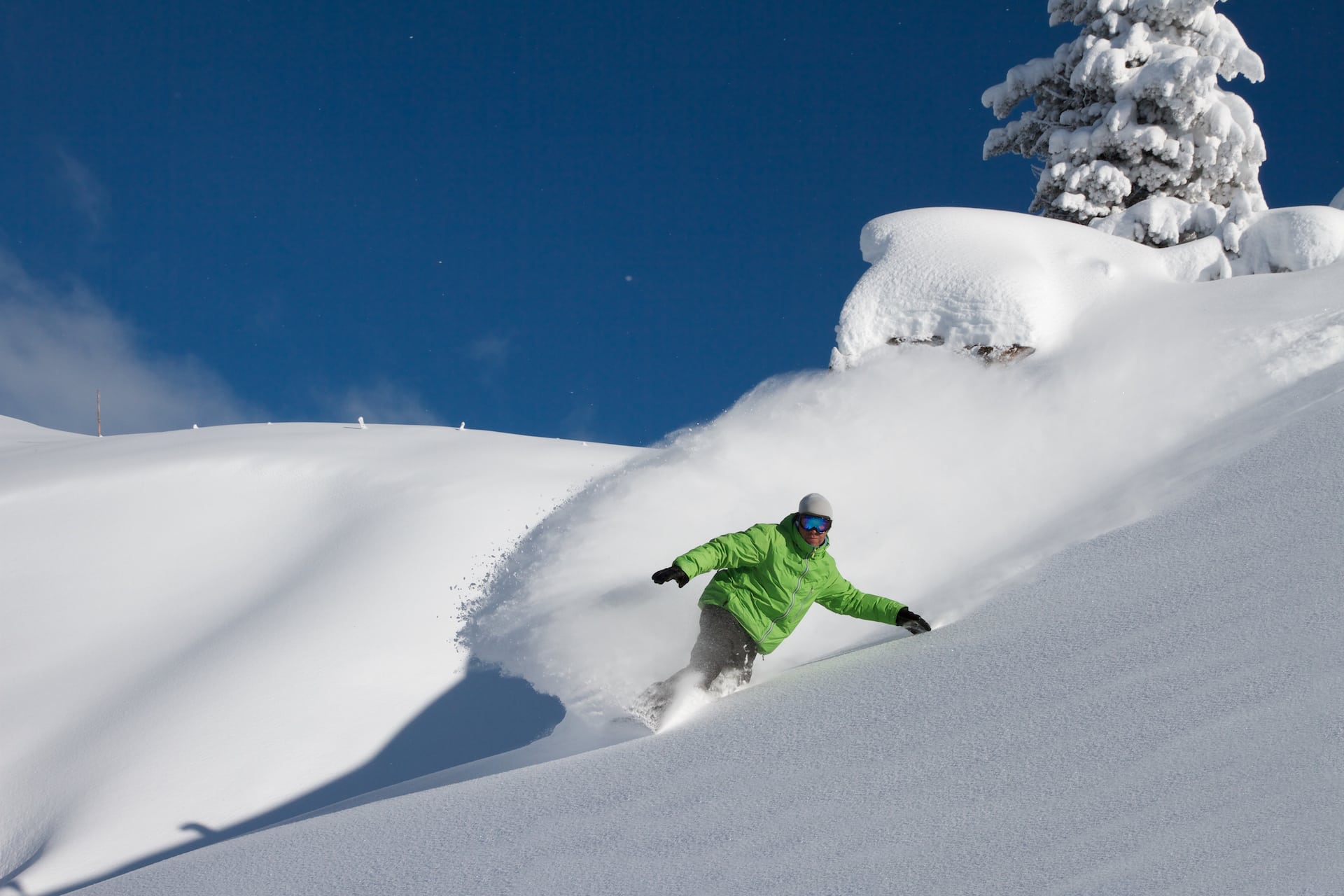
Caption: Turns like this make a freerider's heart beat faster! Radical also offers freeride technique courses to perfect your skills!
1. learn off-piste snowboarding
Powder snow and blue skies - that's the dream! But the snow conditions in the backcountry are often more challenging. From hard snow to ice to frozen avalanche cones: Flexibility and technique are crucial.
Technology for the site
High and low unloading
Terrain jumps and flowing runs
Cut swing shapes and advanced powder technique
These skills can be practiced perfectly on the piste or in open terrain under professional guidance. Freeride and snowboard course providers, e.g. SSBS-certified, will take you safely to your destination.
2. get good material
The right equipment is crucial. In the backcountry, there is no quick fix if something doesn't work. So go for quality - stinginess is out of place here.
Important equipment
Splitboard and binding:
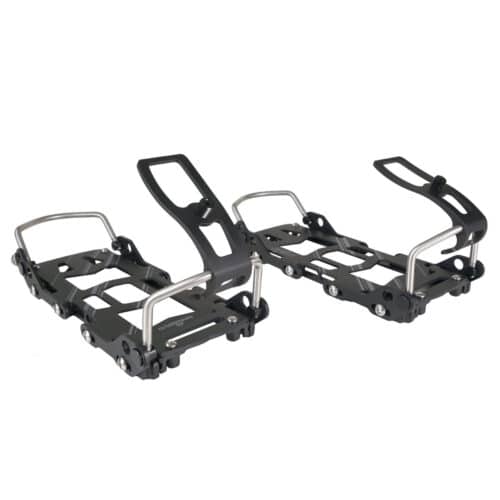
Get good advice. Find a store that specializes in splitboards and knows the advantages and disadvantages of the individual binding systems. You can find an overview of common systems here.
Shoes:
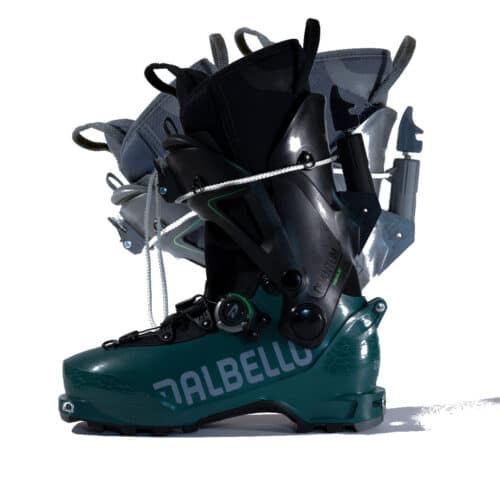
To get started, you can use your existing snowboard boots as long as they offer a grippy profile and a firm lateral flex. If you tour regularly, special splitboard boots are a worthwhile investment. These offer more grip and comfort on the ascent and better control on the descent.
Modified hard boots are an absolute trend, which score particularly well on the ascent thanks to their low weight and rigidity. They offer optimum edge pressure and save energy - ideal for longer and more demanding tours.
Climbing skins:
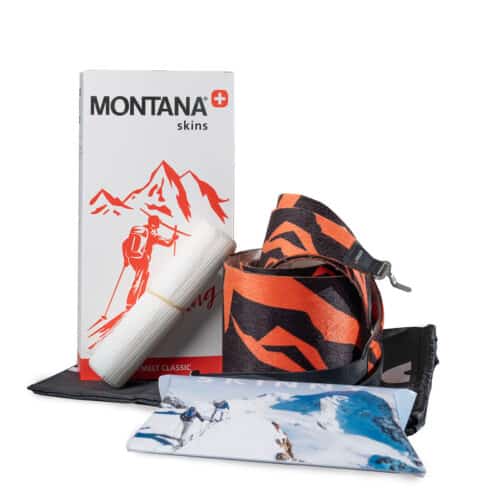
The choice of climbing skins is often underestimated, but they are essential for the ascent. Glue-coated systems have proven to be particularly reliable:
Advantage: Sticks even if climbed several times on the same day.
Care: Make sure they stay clean and use the separating net to protect the glue.
This equipment is an absolute must and should not be missing on any tour.
Avalanche transceiver: For quick retrieval in the event of an avalanche.
Probe: For precise localization.
Shovel: For efficient rescue of buried victims.
Important: Attend an avalanche transceiver course regularly to practise using this equipment. Even the best equipment is useless if you can't use it safely.
You should also maintain your equipment regularly and check that it is in good working order before every tour. By the way: At Radical, we are happy to advise you or offer you rental equipment - ideal for beginners!
The route to the summit is a challenge, but with the right technique it's great fun.
Ascent techniques
Practice hairpin bends and walking techniques on flat terrain or slopes first.
Keep your body straight and distribute your weight over your entire foot.
Use climbing aids for steeper terrain and crampons for icy passages.
Tip: Test assembling your board and putting on and stowing the skins in advance. This will save you time and nerves on the mountain.
4. the tour selection
Start with an easy tour that is not out of your comfort zone. Professionally guided tours, like the ones we offer at Radical, are ideal for beginners.
Planning and inspiration
Platforms such as Whiterisk and Skitourenguru offer useful tools.
Pay attention to your fitness - splitboarding is strenuous and requires reserves for the descent.
Guided tours with experienced guides offer you safety and valuable tips for your first adventure.
5. safety on the mountain
Risks lurk off the slopes, especially from avalanches. Reading the terrain and sound risk management are essential.
Important safety measures
Pay attention to the slope gradient - it is key to avalanche prevention.
Use avalanche reports, e.g. via the Whiterisk app.
Learn how to use avalanche transceivers and train regularly in courses.
Guided tours and workshops help you to learn these skills step by step.
Conclusion
Splitboarding is a fascinating winter sport that combines adventure and nature experiences. With the right preparation, the right equipment and basic safety knowledge, nothing stands in the way of your first tour. Let yourself be inspired, test the backcountry and enjoy the freedom - with brains and enthusiasm!
Ready for your first tour? Visit our store in Zurich or book a guided beginners' tour with Radical. We look forward to seeing you!
Share your questions or experiences with us!
Do you already have your own experience with splitboard tours or do you still have questions about your first tour? We look forward to your comment and the exchange with you!
Today, ski touring is more popular than ever.
Away from the hustle and bustle, you can head into the snow-covered Alps.
The quality of equipment has improved considerably and the choice is enormous.
Impressive places can be reached with a splitboard.
Thanks to high-quality systems, the fun of splitboarding is comparable to that of a conventional snowboard.
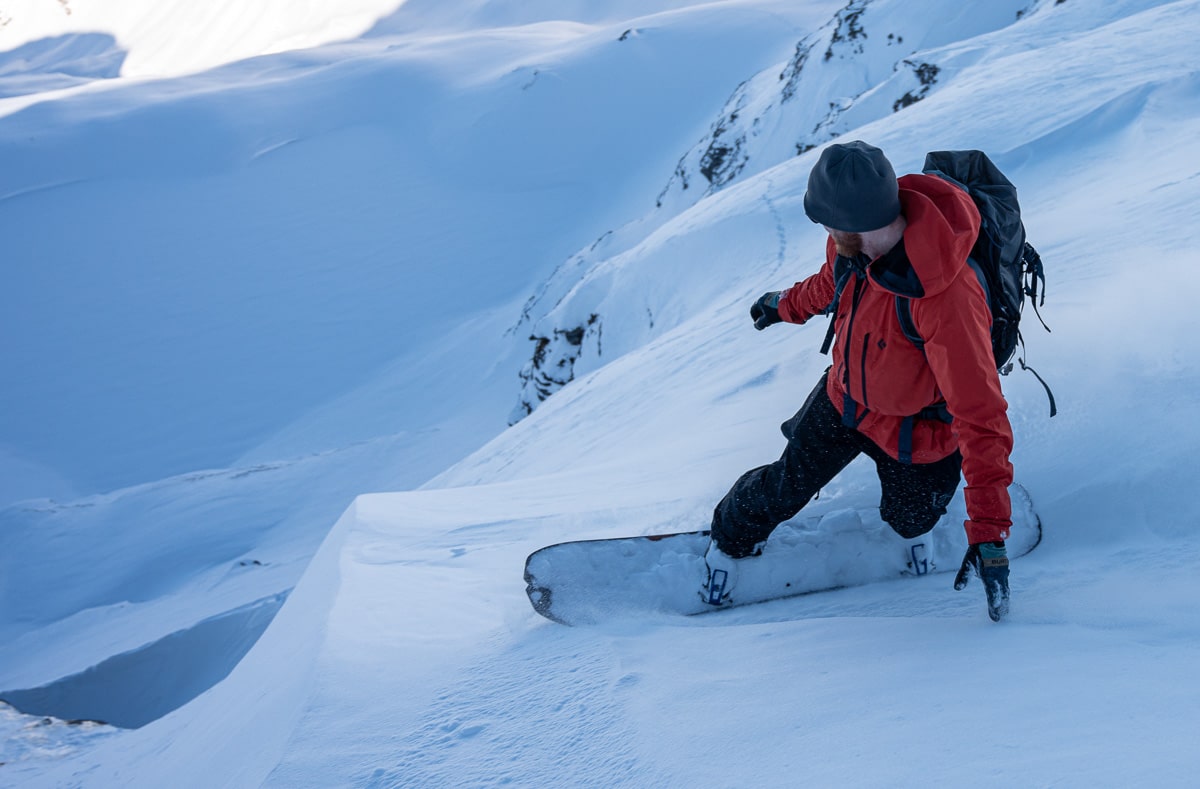
Powder snow and bright blue skies are the dream, but the reality is often different.
Continuous powder snow from the summit to the end of the tour is a rarity.
The snow conditions are constantly changing, and therefore the demands on splitboarders also vary.
From powder to hard snow, wind-pressed snow to ice slabs and frozen avalanche cones - an experienced winter sports enthusiast can adapt to these different conditions.
The lack of performance of splitboard bindings and the corresponding snowboard boots is well known on the ascent.
Particularly in hard snow conditions when traversing, problems with stability can occur during the ascent.
Here we present a solution:
A boot based on a high-quality ski touring boot that has been modified to meet the demands of a snowboarder.
It combines the best of both worlds - the quality of ski touring boots and the spirit of snowboarding.
What are the main advantages of Hardboots?
Lightweight and robust
The ascent is much more relaxed and energy-saving. More metres in altitude and distance with the same effort
Significantly better grip on the ascent
Hairpin bends are easier because the pivot point is further forward
Downhill performance is top: power transmission is significantly better and more precise.
Especially backside.
What are the disadvantages
Walking with a hard shell is less comfortable than a soft boot
Pressure points can be removed by professional boot fitting, but cost extra
Price is higher than for a soft boot
Cushioning is less good than with soft boots, but we have a solution for that at Radical.
Is the shoe suitable for everyone?
The clear answer is: Yes and no!
Everyone has different needs and requirements in terms of performance and material.
But watch out now: With us, you have the unique opportunity throughout Switzerland to test a hard boot with splitboard and system for yourself!
You no longer have to listen to the opinions of others, you can experience it for yourself.
True to our motto: Radical makes you ride better!
Can you test the shoe?
Yes, with us in Zurich-Wollishofen.
You can also rent the complete system from us: Hardboots, splitboards, bindings, skins, poles, avalanche transceivers.
Further test possibility in Chur: Reina Outdoor GmbH, Reto Freimüller, 079 669 14 40
Is the shoe compatible with all systems?
Compatible with all pin systems
We see the following brands as ideal: Voile, Spark and Plum.
Various systems can be viewed and tested in our store.
Is the shoe suitable for freeride and/or freestyle?
Absolutely.
It's like a robust freeride soft boot.
For example, the XV from Deeluxe or DriverX from Burton.
How does the shoe compare to the competition?
This shoe, developed in Switzerland, offers the following advantages compared to other brands:
After us, the best performance
Highest quality outer shell
The Phantom Boot is only available in the USA, as are the spare parts
The Key Equipment has no suspension in the highback
A fair price-performance ratio and the option to test the shoe
The shoe can be adjusted to your foot, both the inner shoe and the outer shell
Can you also ski with the boot?
Yes, it works.
But moderately well.
However, the boot is softer than a conventional touring boot.
An optional buckle can be attached so that you can ski without restrictions.
Mit grosser Freude teilen wir mit, dass wir die Weichen für die Zukunft von Radical gestellt haben!
Radical, mittlerweile mit 40 Jahren der älteste Snowboardhersteller der Schweiz, erlebt einen bedeutenden Moment: Der Gründer Mark Farner übergibt sein Herzensgeschäft an seine langjährigen Mitarbeiter Niki Huwyler, Florian Hösli und Patrick Stauber.
Mark wird selbstverständlich weiterhin Teil des Teams bleiben und bis zu seiner Pensionierung aktiv mitarbeiten. Auch danach steht er uns mit Rat und Tat zur Seite. Der Spirit des Gründers wird somit auch in Zukunft weiterleben und die Werte und Visionen von Radical prägen.
Diese spannende Entwicklung markiert einen neuen Meilenstein in unserer Geschichte, und wir freuen uns darauf, dir auch in Zukunft hochwertige Produkte und Dienstleistungen anbieten zu können.
Für dich als geschätzten Kunden ändert sich wenig durch die Übernahme. Unsere bewährte Qualität, unser Kundenservice und unsere Einsatzbereitschaft bleiben unverändert. Wir sind fest entschlossen, deine Bedürfnisse weiterhin bestmöglich zu erfüllen.
Das gesamte Radical-Team möchte dir an dieser Stelle für deine kontinuierliche Unterstützung und dein Vertrauen danken. Wir freuen uns darauf, unsere Zusammenarbeit fortzusetzen und weiter zu stärken.
Wie lagere ich meines Skis und Snowboards im Sommer richtig?
Der Saisonabschluss naht und damit auch die Frage, wie man Ski und Snowboard nach der letzten Abfahrt der Saison pflegen sollte und wie die Skiausrüstung am besten gelagert wird. Mit unseren Tipps hat man auch im kommenden Winter noch viel Freude an seinem Material.
Ski und Snowboard sollten nach der letzten Benutzung gründlich gereinigt und abgetrocknet werden.
Ist die Lauffläche der Skier oder des Boards beschädigt, sollte man diese noch vor dem Einlagern mithilfe einer Repair Candle ausbessern oder einen professionellen Belagsflick durch einen Fachmann ausführen lassen. Sind die Kanten rostig, schleift man diesen vor dem Einlagern ab, um die Ausbreitung zu verhindern.
Anschliessend werden Laufflächen und Kanten mit einer kleinen Schicht Heisswachs versiegelt, die nicht abgezogen wird. So sind die Kanten optimal vor Rost geschützt, die Lauffläche kann nicht austrocknen und bleibt elastisch. Vor dem Start in die neue Saison muss man dann nur noch das überschüssige Wachs abziehen und mithilfe einer Belagsbürste die Struktur des Skis oder des Snowboards wieder freilegen.
Die Lagerung sollte an einem trockenen und sonnengeschützten Ort erfolgen. Am besten aufgestellt und einzeln an eine Wand anlehnen, so wird der Vorspann der Produkte entlastet. Achtet jedoch darauf, dass sie vor dem Umfallen geschützt sind. Die meisten Kantenstauchungen erfolgen aufgrund eines Sturzes auf den Betonboden in der Garage.
Bindungen
Auch die Bindung mit Wasser und Seife säubern und anschliessend mit Bindungsspray einsprühen. Das schützt vor Oxidation und Korrosion.
Bei Tourenbindungen mit PIN System empfehlen wir diese mit geschlossenen Vorderbacken zu lagern. Dies, um die Feder zu entlasten.
Ski- und Snowboardschuhe
Ski- und Snowboardschuhe sollten nach dem letzten Einsatz von Schmutz gesäubert, anschliessend gut ausgelüftet werden und getrocknet sein, bevor sie in den Keller oder auf den Speicher wandern.
Bei Snowboardschuhen mit Boa-System zieht man die Schnürung fest zu und öffnet danach das Rad. Der Schuh bleibt so in seiner Passform und das Boa-System ist entlastet.
Bei Skischuhen entfernt man zum Trocknen die Innenschuhe und gibt sie erst nach mehrtägigem Trocknen wieder in die Hartschale. Dabei sollte man unbedingt darauf achten, dass der Innenschuh ohne Falten in der Schale sitzt und anschliessend die Schnallen des Skischuhs locker schliessen. So behält der Schuh die Passform und verformt sich nicht.
Service und Reparaturen bei Radical
Gerne übernehmen wir die nötigen Arbeiten an deinen Ski- und Snowboards. Wir bieten fachkundigen Service und Reparaturen aller Art. Auch für Fremdmarken.
Unsere Tipps, um deinen Service möglichst kostengünstig zu halten:
– Snowboardbindung Zuhause lassen.
– Eine allfällige Wachsschicht schon Zuhause abziehen.
Ab Mai können bei uns Termine gerne auf Anfrage gemacht werden.



Letzte Kommentare