
Which binding angle should I choose and why?
Choosing the right binding angle is essential for comfort, control and riding style when snowboarding and splitboarding. Whether freestyle, freeride or touring - different angles have specific advantages and disadvantages. In this article, we explain the different settings and give tips on which angle is best for you.
Basics of the bond angle
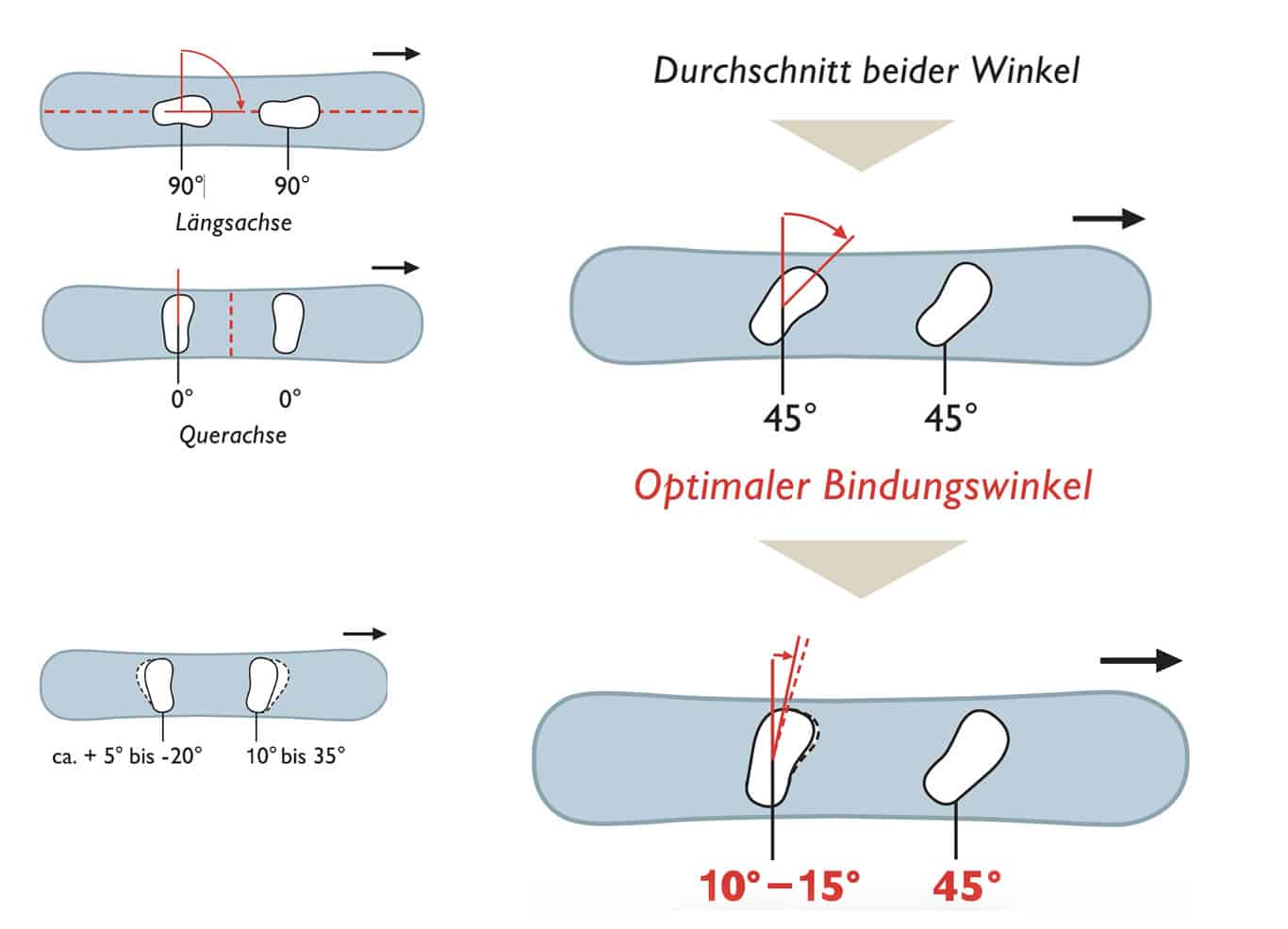
The binding angles are given in degrees and describe the alignment of the feet on the board. There are two directions:
- Positive angle (+): The tips of the toes point forwards.
- Negative angle (-): The tips of the toes point backwards.
The most common bond angle configurations
1. Duckstance (-15° / +15° or variable)
Advantages:
- Very good for freestyle, park and fakie riding
- Increased freedom of movement for tricks and spins
- Relieves pressure on the knees through a more natural posture
Disadvantages:
- Less stability at high speeds
- Not ideal for pure freeriding or steep descents
2. Forward stance (0° to +30° at the front, 0° to +15° at the rear)
Advantages:
- Versatile mix of control and freedom of movement
- Good for beginners and all-mountain riders
Disadvantages:
- Fakie driving is more difficult
- Limited mobility for tricks
- From shoe size 43, better more angle or/and wider board
3. All-mountain stance (+15° to +45° front, 0° to +15° rear)
Advantages:
- Perfect for carving, freeride and high speeds
- More control on steep slopes
Disadvantages:
- Neither extremely optimized for freestyle nor park
- Fakie driving is more difficult
Binding angle for splitboarding
When touring with a splitboard, the binding angles play an even more important role. Here are some tried and tested settings:
- Ascent: In the walking position, the bindings are usually parallel (0° / 0°) or slightly forward to improve ergonomics. Set the HiBack to 0° or backwards to increase the stride length. For steep traverses, a forward angle of the HiBack can be useful.
- Departure: A forward stance (+15° to +30° at the front, 0° to 10° at the back) is usually preferred, as this gives more stability in untracked terrain. In addition, a setback so that the nose is longer than the tail for better lift.
- Alternative: Some riders choose a slight duck stance if they also want to ride fakie in the backcountry. However, as this rarely happens, a positive angle is more worthwhile.
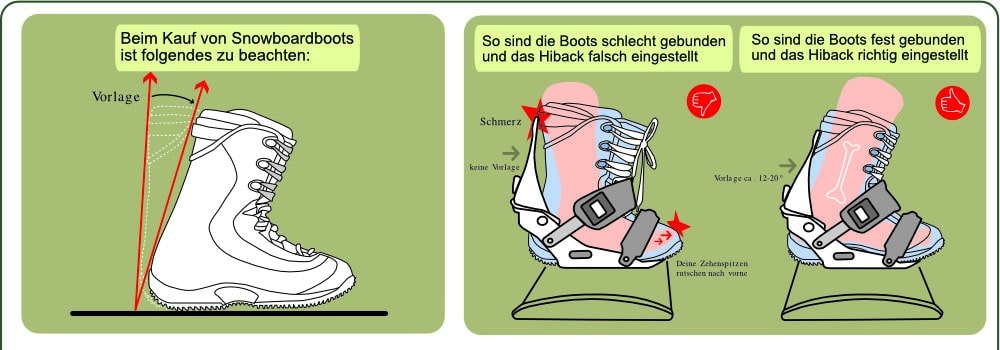
As the forces come from the front, i.e. from the direction of travel, it makes sense to choose a binding angle that is oriented towards the direction of travel. From boot size 43-44, 0° is of course no longer optimal. A wider board can help. For freeriding, a setback, i.e. moving the binding backwards so that the nose (tip of the snowboard) gets more lift. The aim is to turn via active rotation from the knees and hips and to use torsion. The weight should be 50/50 on both legs. A weight on the back foot loses stability and requires an unnecessary amount of strength.
Difference between switch and fakie
Switch and fakie are terms used in skateboarding and snowboarding to describe the position of the feet on the board
Skateboard
- When riding switch, the foot normally positioned at the back is at the front of the board.
- When riding a fakie, the tail of the board is at the front.
Snowboard
- In snowboarding, there is actually also a distinction between fakie and switch. As the feet are firmly attached to the board, it is not possible to switch to switch unless you change the screws.
- In snowboarding, however, the normal backward movement is usually called a fakie. However, many also call it a switch, which is not entirely correct.
Skiing
- In skiing, the term fakie is used when the skier descends the slope backwards.
- The term is often used to indicate how a ski trick is performed.
Trick examples
A "frontside bluntslide to fakie" is a trick in which the rider slides 90 degrees across the rail and turns off the rail so that he continues riding "switch".
Goofy or regular?
Goofy or regular refers to the alignment of the feet on the snowboard.
In the goofy stance, the right foot is in front, in the regular stance the left.
How do I find out if I am Goofy or Regular?
- Let yourself be pushed slightly from behind from a parallel stance. The foot with which you first take a step forward is usually the foot that is at the front of the snowboard.
- Stand on a smooth surface in your socks and ask someone to push you gently.
- Imagine you are walking up a flight of stairs. Which foot do you step on first?
- Imagine you have to kick a ball. Which foot would you use?
Which is better?
There is no clear advantage for a particular stance. Snowboard bindings work equally well for both stances.
Snowboard mechanics
Snowboard mechanics together with physics are crucial for understanding "why" and "how" something happens.
You can find out the details in this PDF:
Binding distance
You can estimate the distance for snowboard bindings with your shoulder width or by measuring from foot to knee. For a freerider with a height of 180cm, a binding distance of around 51 - 55cm from middle to middle is a good value.
Shoulder width
- Take the width of your shoulders and use it as the distance between the bindings.
Foot to knee
- Measure from the bottom of your feet to the top of your knees.
Jumping
- Jump down from a chair and measure the distance between your feet.
Rule of thumb
- Your knees should be over your feet when bending, so you need to stand slightly more than shoulder-width apart.
Driving style
- The ideal binding distance also depends on your riding style.
- Those who spend a lot of time in the park usually prefer a relatively wide stand.
Binding adjustment
- The binding size depends on the size of your snowboard boots.
- The highbacks of the bindings can be rotated and adjusted in the template.
- The template of the highback should be adapted to that of the boat.
- From boot size 43-44, 0° is no longer optimal. Better to ride steeper and/or wider boards.
Andi
Its driving angle:
Front 27° Rear -3°
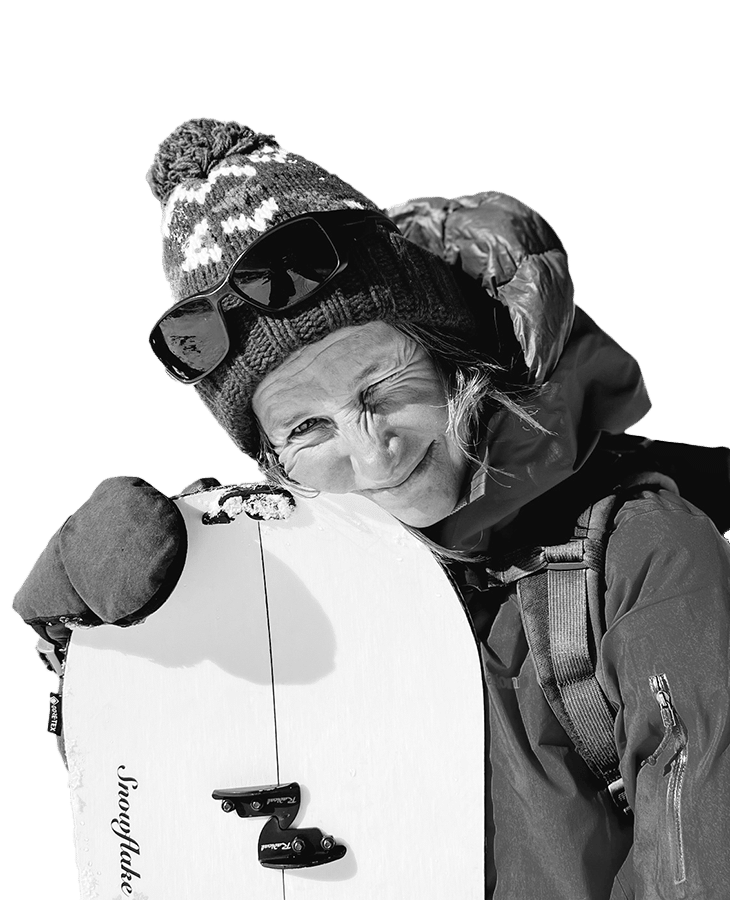
Sandra
Your driving angle:
Front 30° Rear -5°
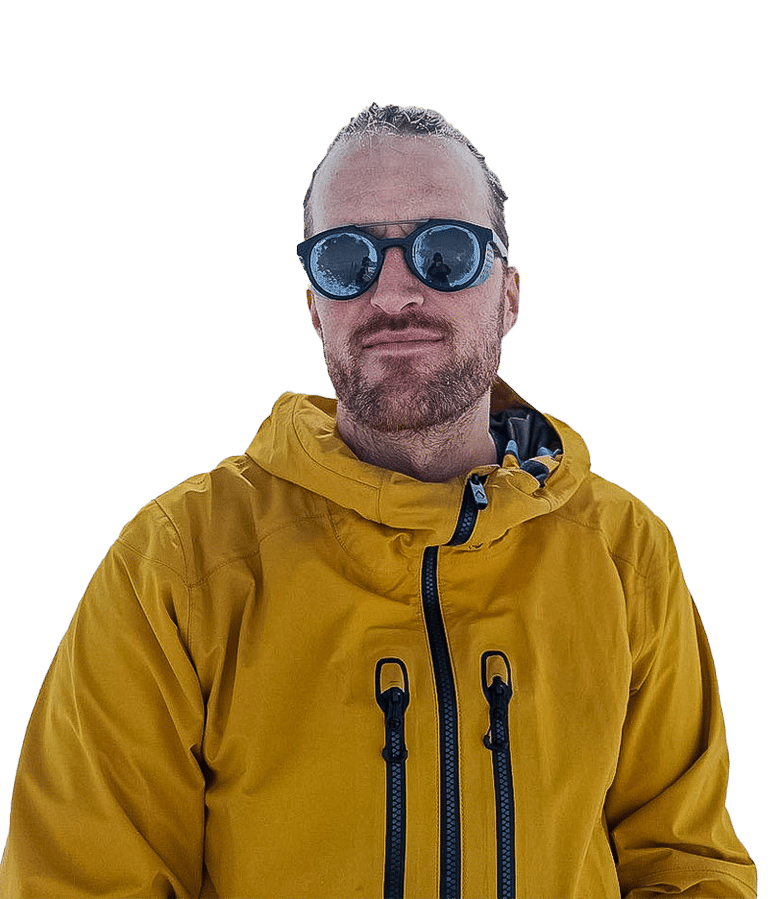
MoH
Its driving angle:
Front 30° Rear 0°
In the park: 18°, -12°
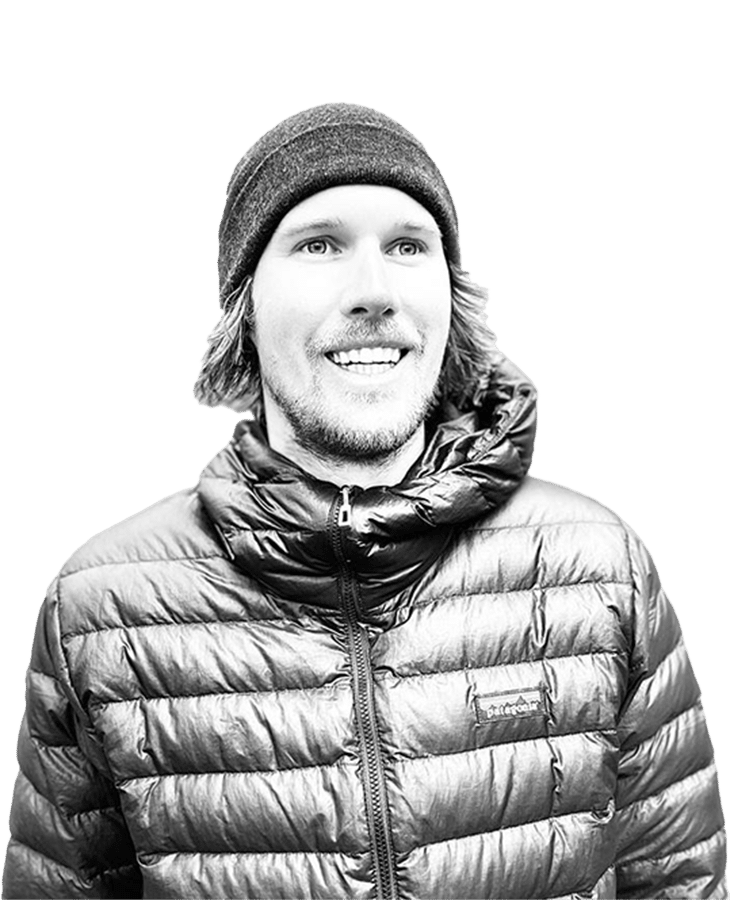
Tim
Its driving angle:
Front 27° Rear 0°
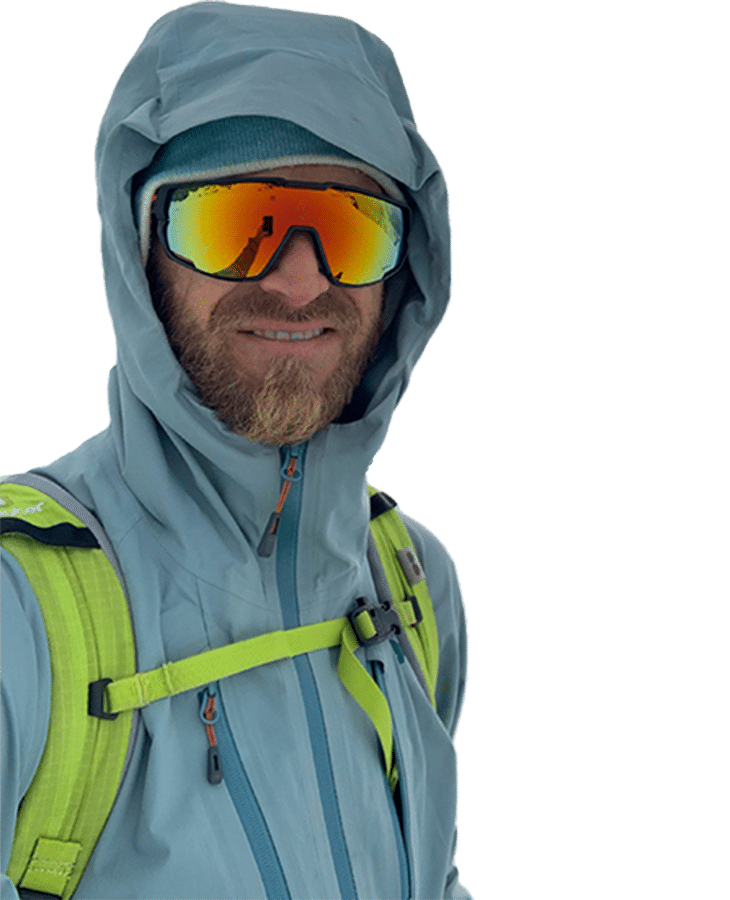
Niki
Its riding angle:
Front 36° Rear 9°
When touring: 30° and -3°.
Conclusion
Choosing the right binding angle depends heavily on your riding style and area of use. Experiment with different angles to find the perfect balance between comfort, control and performance. Especially when splitboarding, you should think about both the ascent and the descent to get the best out of your setup.
Riding skills and the resulting riding technique make a lot of things easier. We at Radical Sports also offer such technique courses. We are all qualified snow sports instructors. We also set up your equipment according to your wishes and help you find your perfect setup.
Letzte Kommentare